
Helix Mural Process: From Concept to Wall
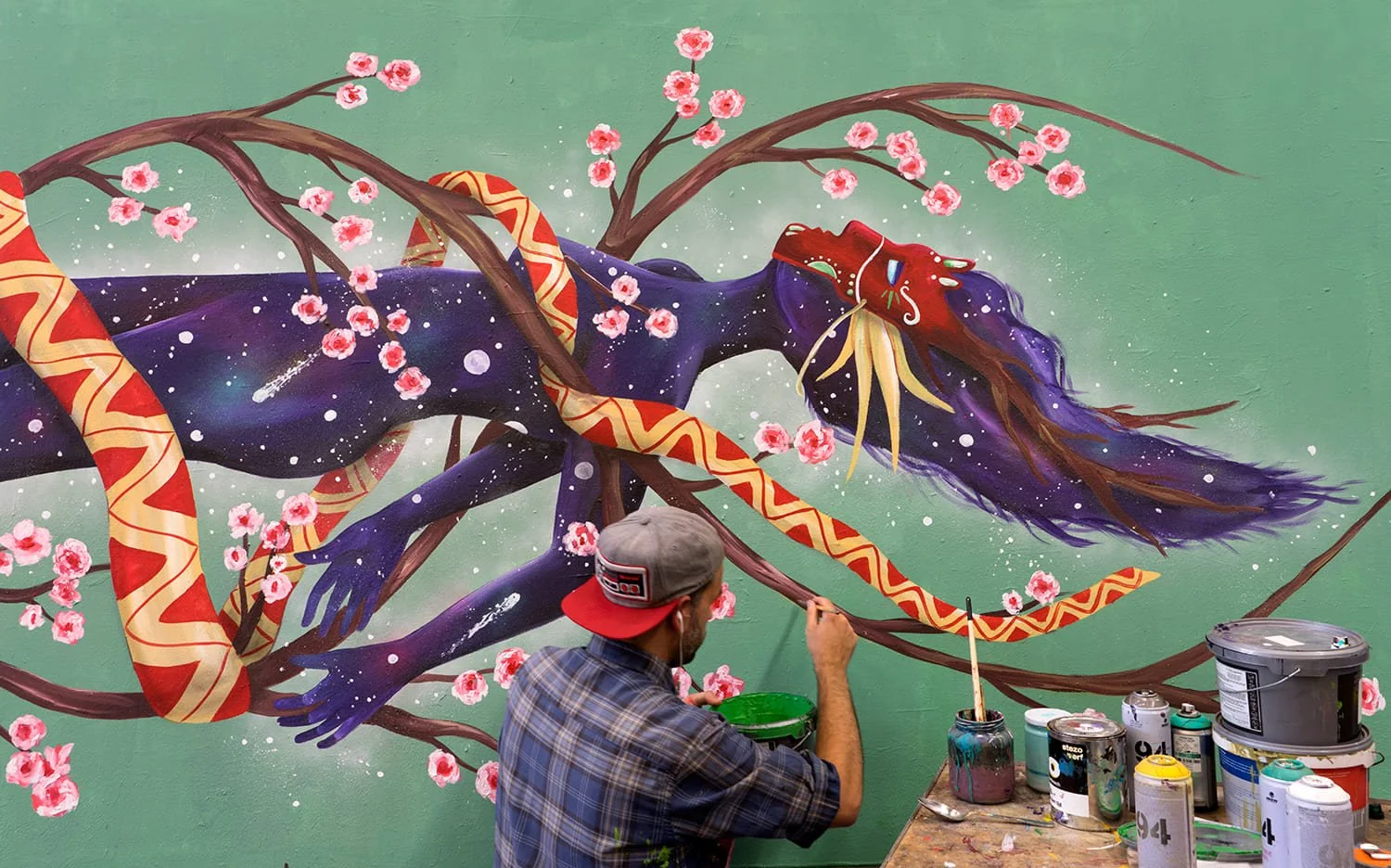
Public art, for me, is not just about placing an image in a space. It’s about creating something that can exist within the rhythm of a city while carrying a deeper layer of meaning. Helix, a mural I painted in Amsterdam, began as an exploration of structure, movement, and transformation.
Helix is an artwork exploring resilience and transformation through the language of symbolic form.
The idea behind the helix
The concept for “Helix” comes from the helix as a universal structure found throughout nature. From DNA to galaxies, the spiral appears as a recurring system of movement, adaptation, and evolution, a pattern through which life organizes itself.
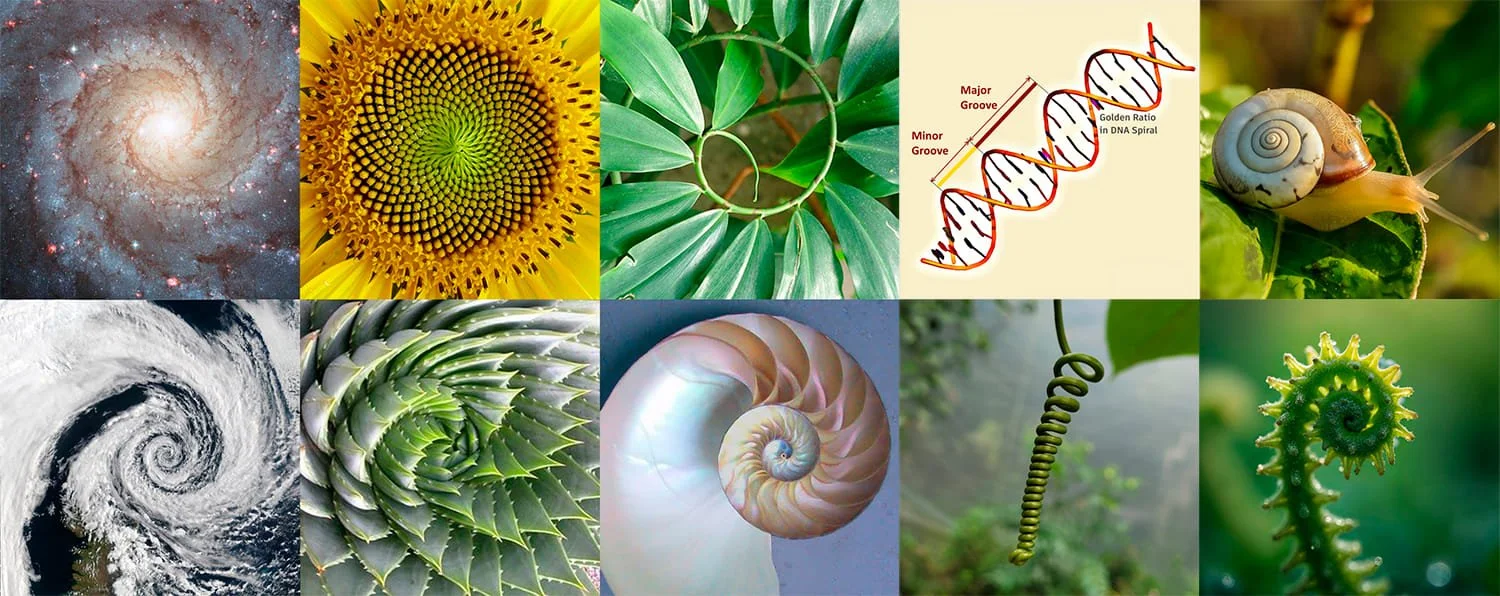
Natural spiral and helix forms found in plants and organic growth patterns.
I’m drawn to these forms because they exist beyond culture. They are intuitive, embedded in the way we perceive growth and evolution. The helix, in particular, suggests continuity: it doesn’t move in a straight line, but in cycles that expand, repeat, and evolve over time.
Rather than representing resilience as resistance alone, the helix reflects a more dynamic process. It bends, adjusts, and transforms in response to obstacles. Growth doesn’t happen despite friction, but through it. Each turn of the spiral is shaped by tension, pressure, and adaptation.
In this sense, the helix becomes more than a natural structure, it becomes a way of understanding transformation, not as a linear path, but as an ongoing process of adjustment, repetition, and emergence.
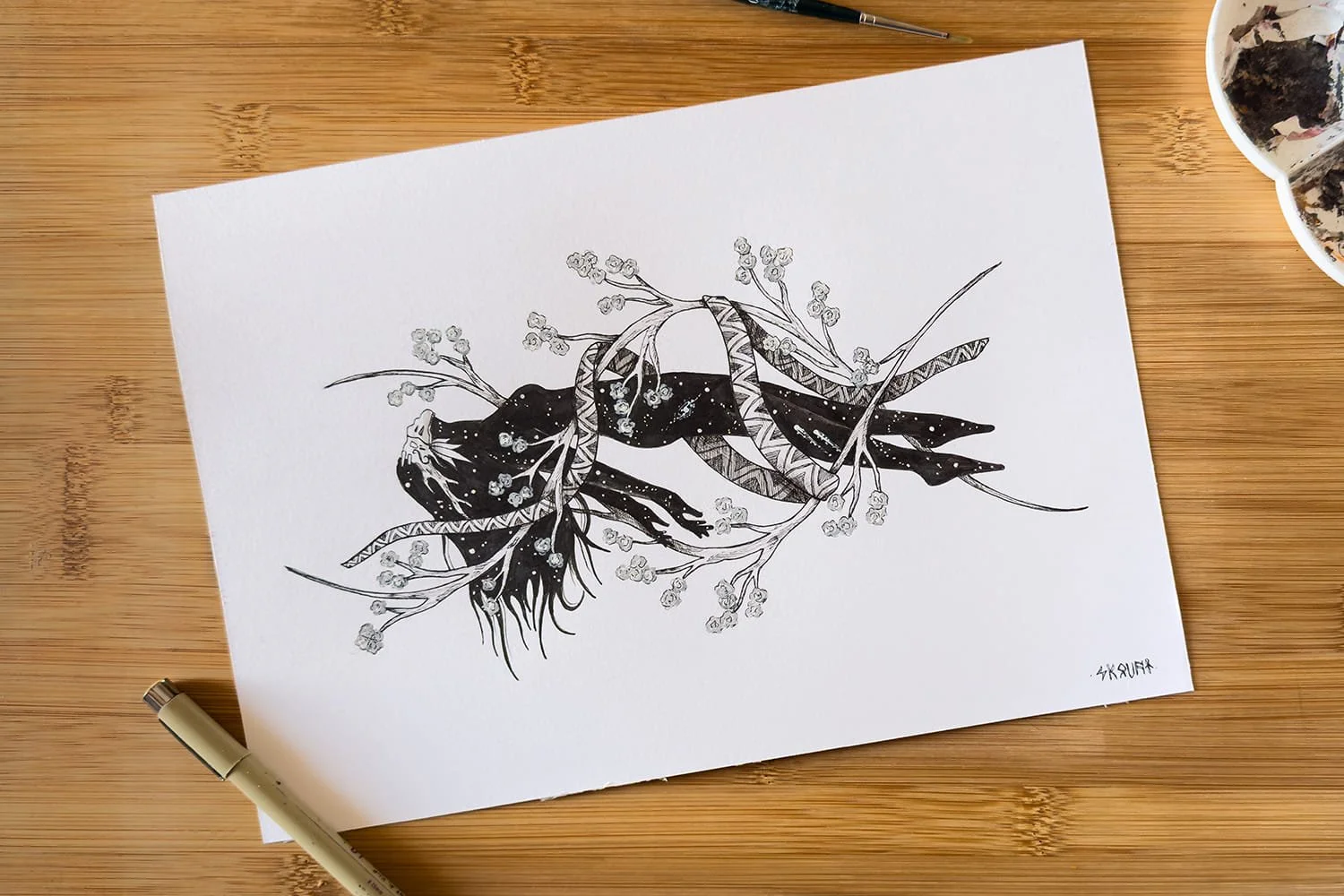
Ink drawing exploring the helix as a structure of movement and transformation.
From concept to mural
Translating this idea into a mural meant reducing the composition to its essential elements. At a large scale, every line carries weight, and the structure had to remain both balanced and dynamic.
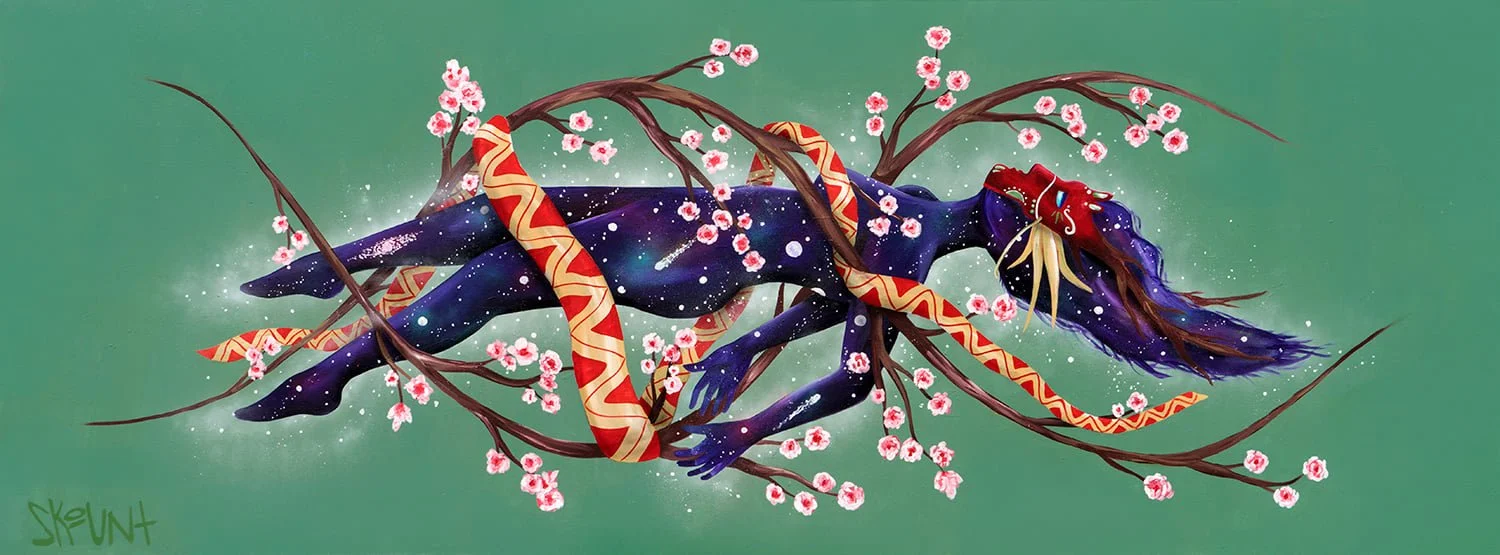
Helix was painted as a large-scale billboard in Amsterdam, where the work becomes part of the urban environment. In public space, the mural interacts with architecture, light, and the movement of people, shifting depending on perspective and context.
Symbolism and public space
Symbolism plays a central role in my work. I’m not interested in fixed meanings, but in creating forms that remain open. The helix, as a spiral structure, allows for multiple readings, it can suggest growth, resistance, transformation, or simply movement.
In public art, this openness becomes essential. The work exists in everyday space, where each viewer brings their own interpretation. The meaning is not imposed, it emerges through experience.
“Helix” is part of an ongoing exploration of how symbolic forms can exist within public space. For me, the city becomes a canvas where ideas don’t stay static, they move, interact, and evolve with their environment.
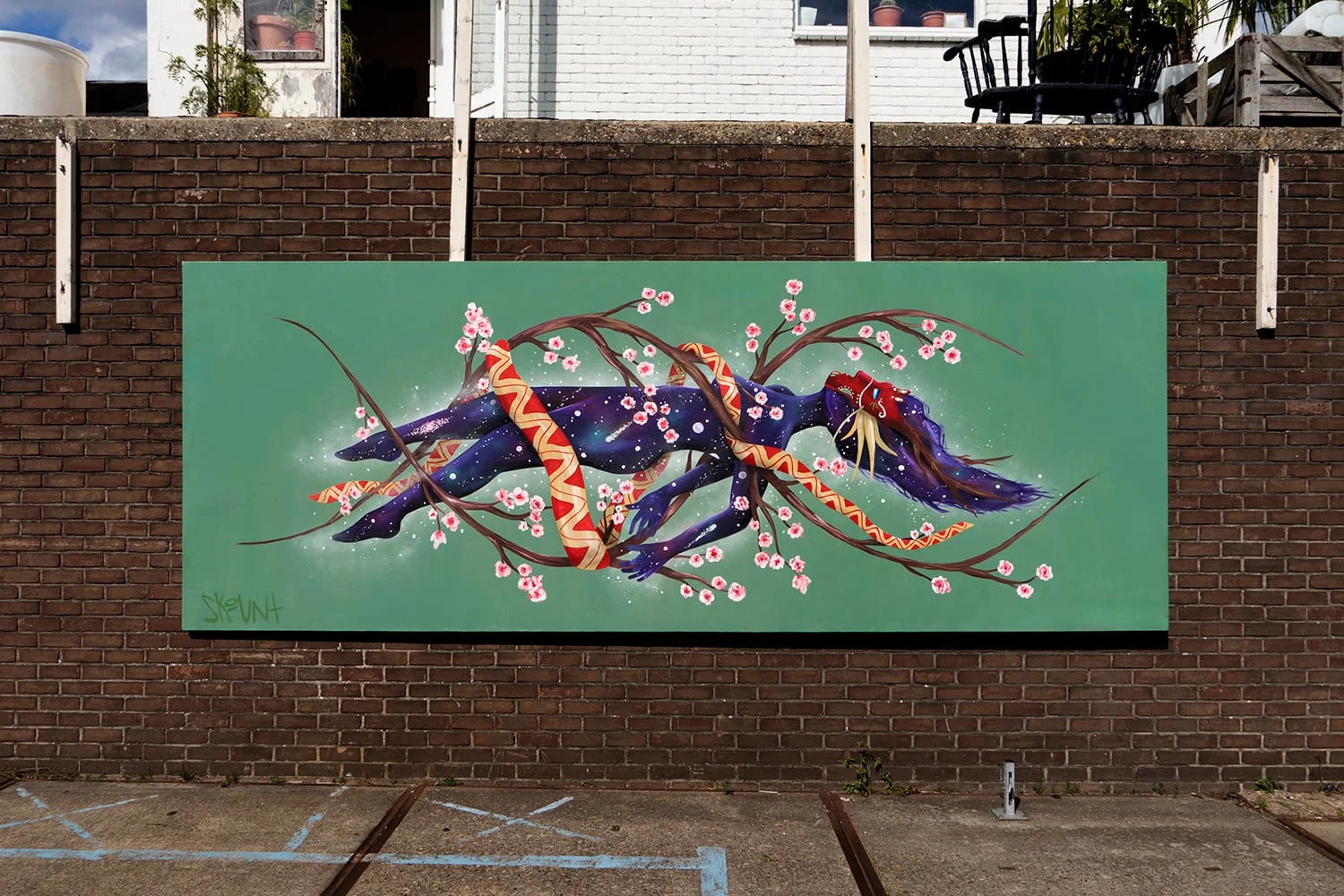
Helix mural in Amsterdam, exploring resilience and transformation through spiral form.