
Dísir: Paintings Inspired by Norse Mythology
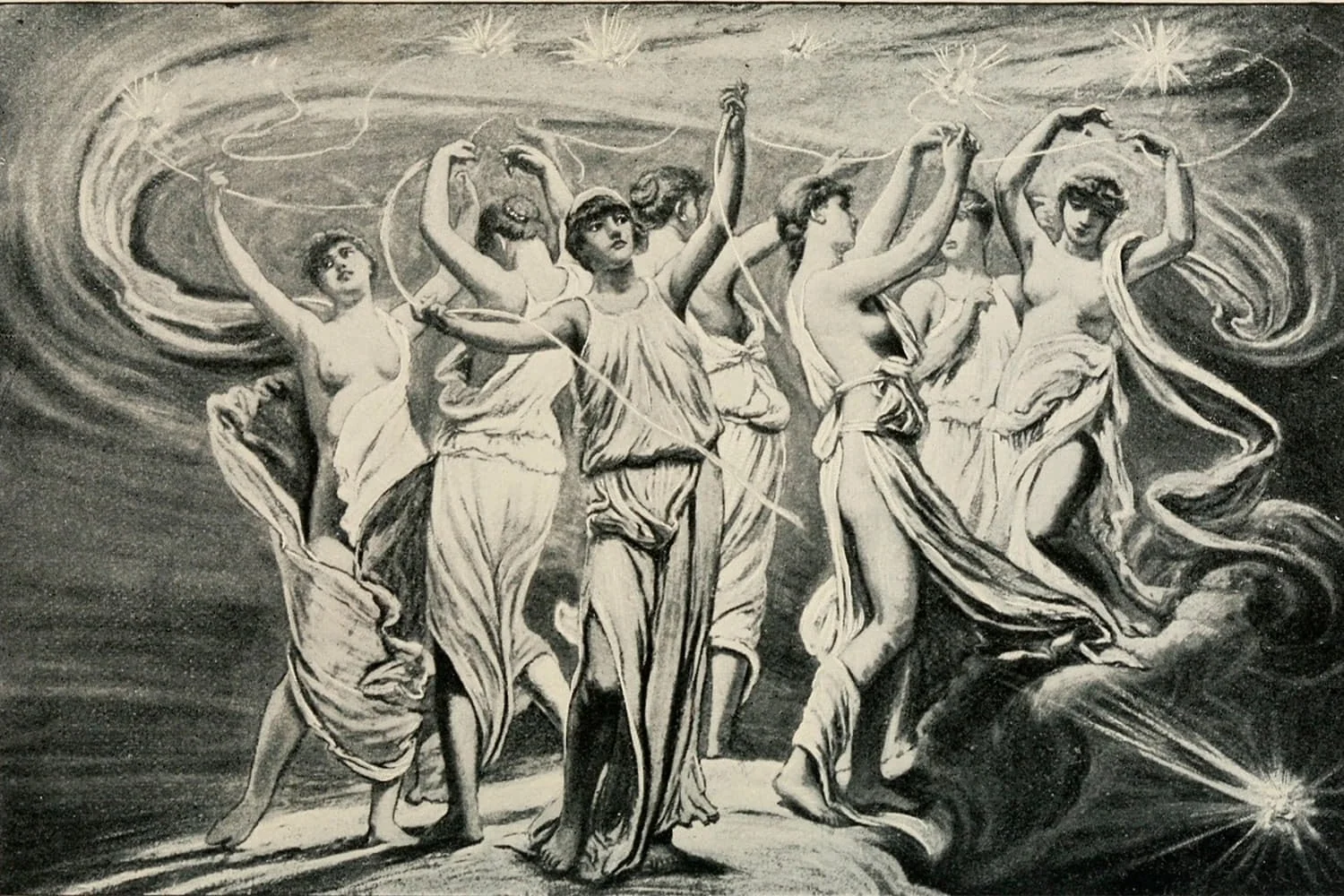
In Norse mythology, the Dísir are protective female spirits connected to destiny, ancestral lineage, and spiritual guardianship. Though less widely known than figures like Odin or Thor, their presence reveals a profound dimension of feminine protection deeply rooted in ancient belief.
In my Dísir paintings, I reinterpret these ancestral figures through contemporary symbolic portraiture, not as literal mythological reconstructions, but as archetypal presences that continue to resonate in the modern psyche.
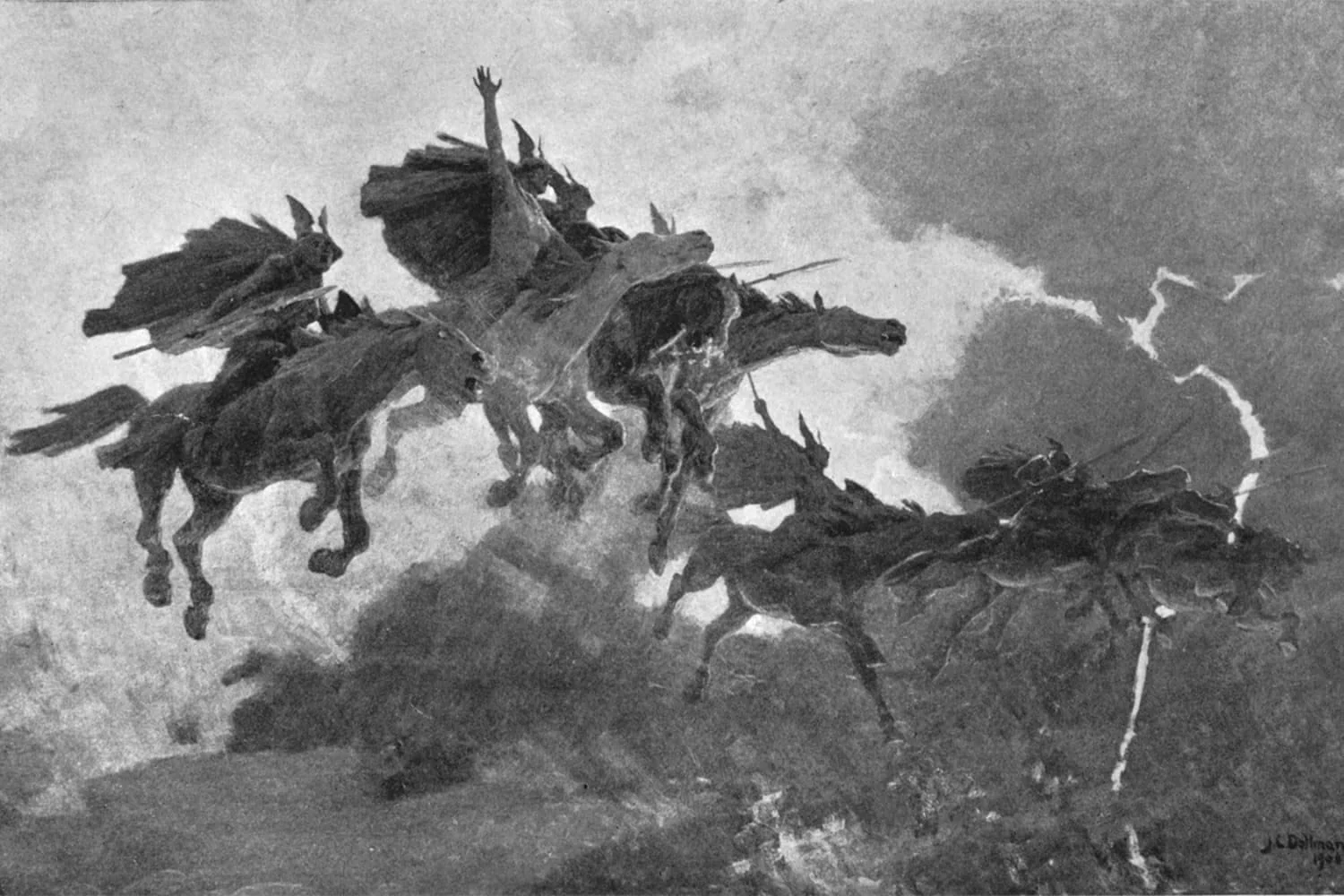
The Ride of the Valkyrs by John Charles Dollman
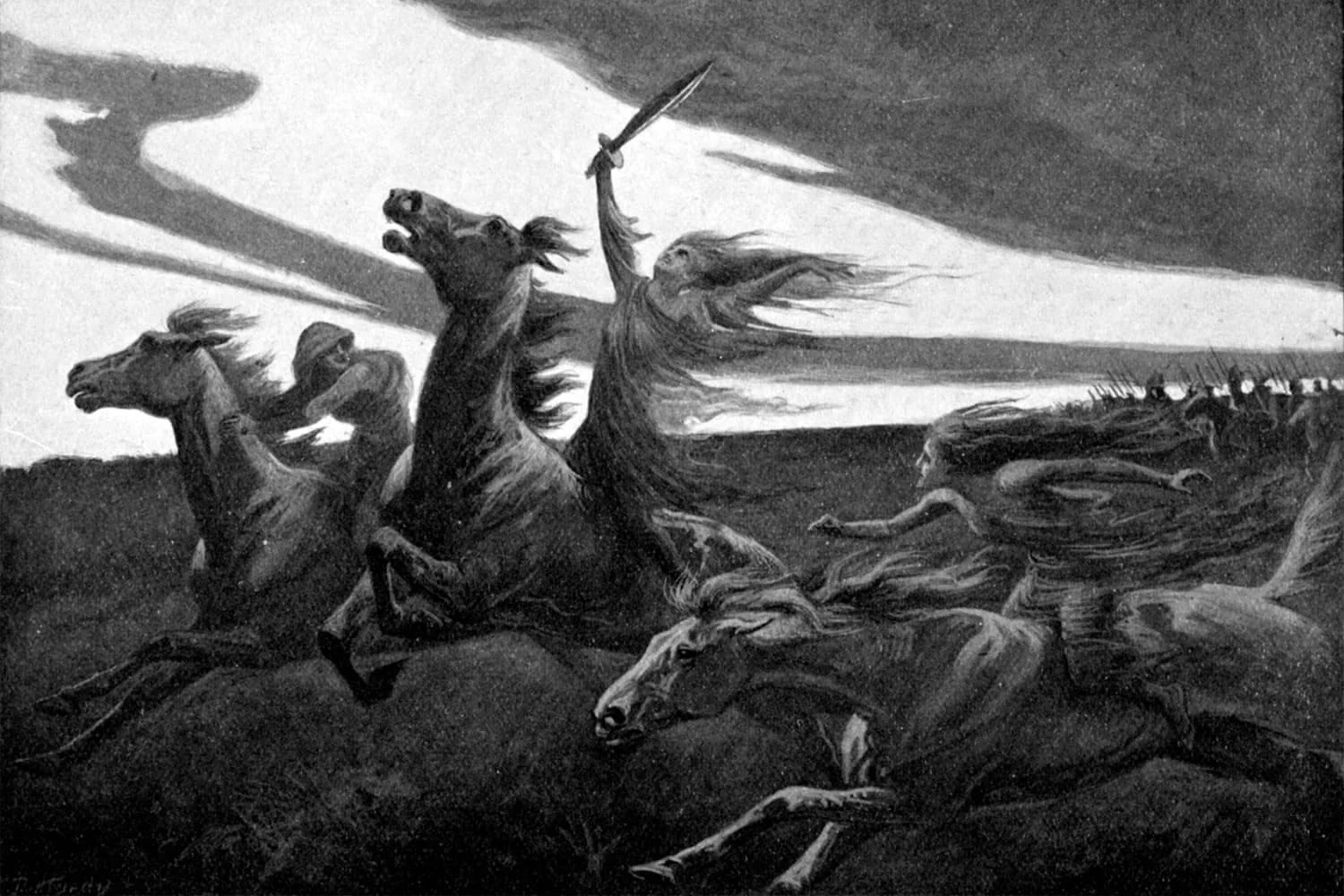
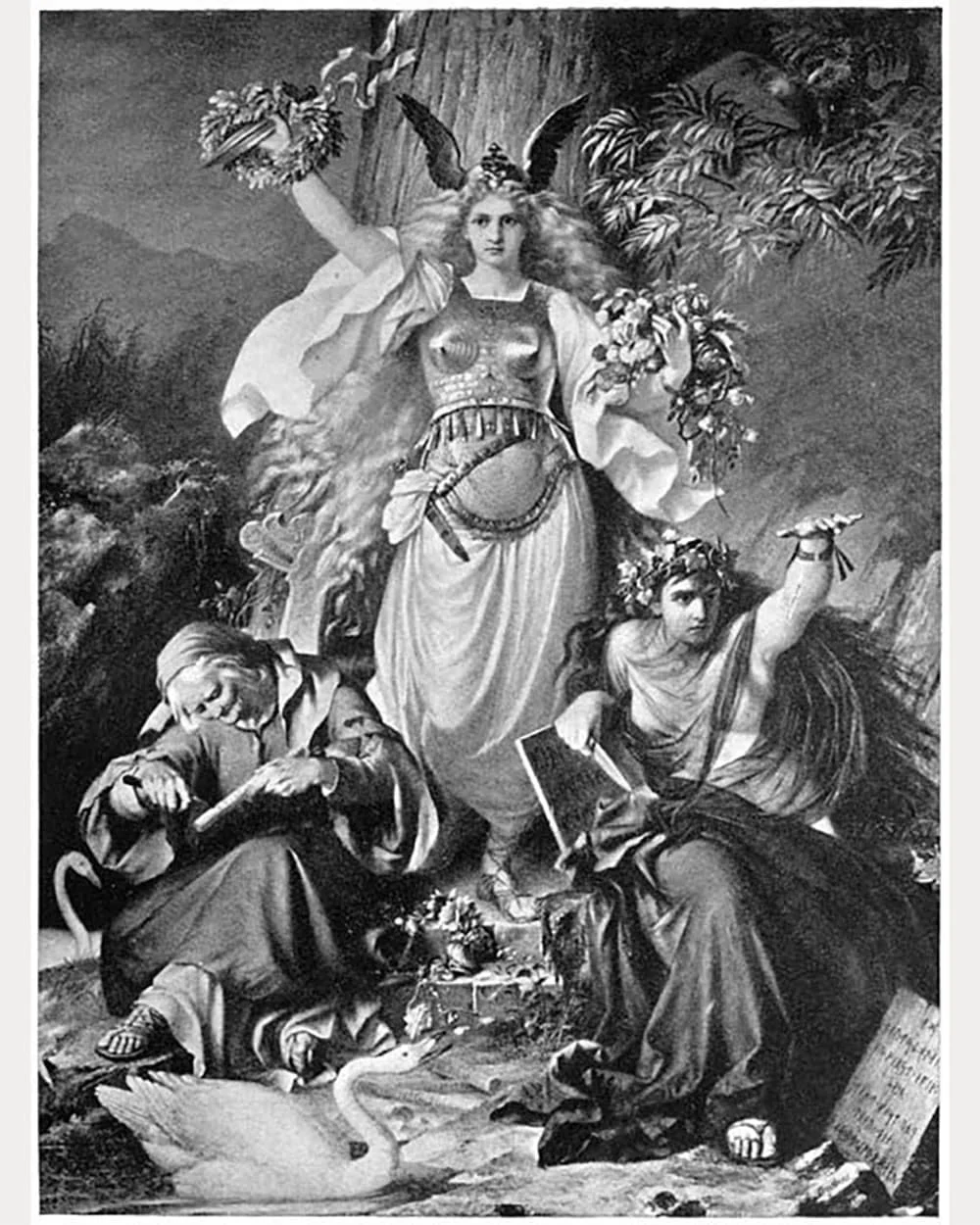
The Dises by Dorothy Hardy
The Dísir: Meaning, History, and Symbolism
The word dísir comes from the Old Norse term dís, meaning “lady” or “goddess.” It could broadly refer to female supernatural beings, but it most often denoted ancestral spirits linked to fate, protection, and lineage. The Dísir were believed to watch over families and act as guardians of prosperity and destiny, appearing at pivotal moments: before battles, during illness, or periods of transformation.
Rituals such as the Dísablót were performed in their honor. While they share similarities with the Norns and the Valkyries, the Dísir remain more intimately tied to ancestral guardianship and personal destiny.
As a collective archetype rather than a single deity, the Dísir symbolize protection, intuition, and spiritual guidance. Their essence continues to inspire contemporary art, including my paintings, where they manifest as representations of inner strength, transformation, and feminine archetypes.
Feminine Archetypes and Inner Protection
For me, the Dísir are not distant mythological figures. They embody a universal feminine archetype, protective, intuitive, and transformative.
Through this series, I explore how protection does not come from external force, but from inner alignment. Transformation, knowledge, and awareness form a cycle that reflects both ancient belief and contemporary experience. My aim is not to recreate mythology, but to reinterpret it, allowing these ancestral spirits to live again through symbolic portraiture.
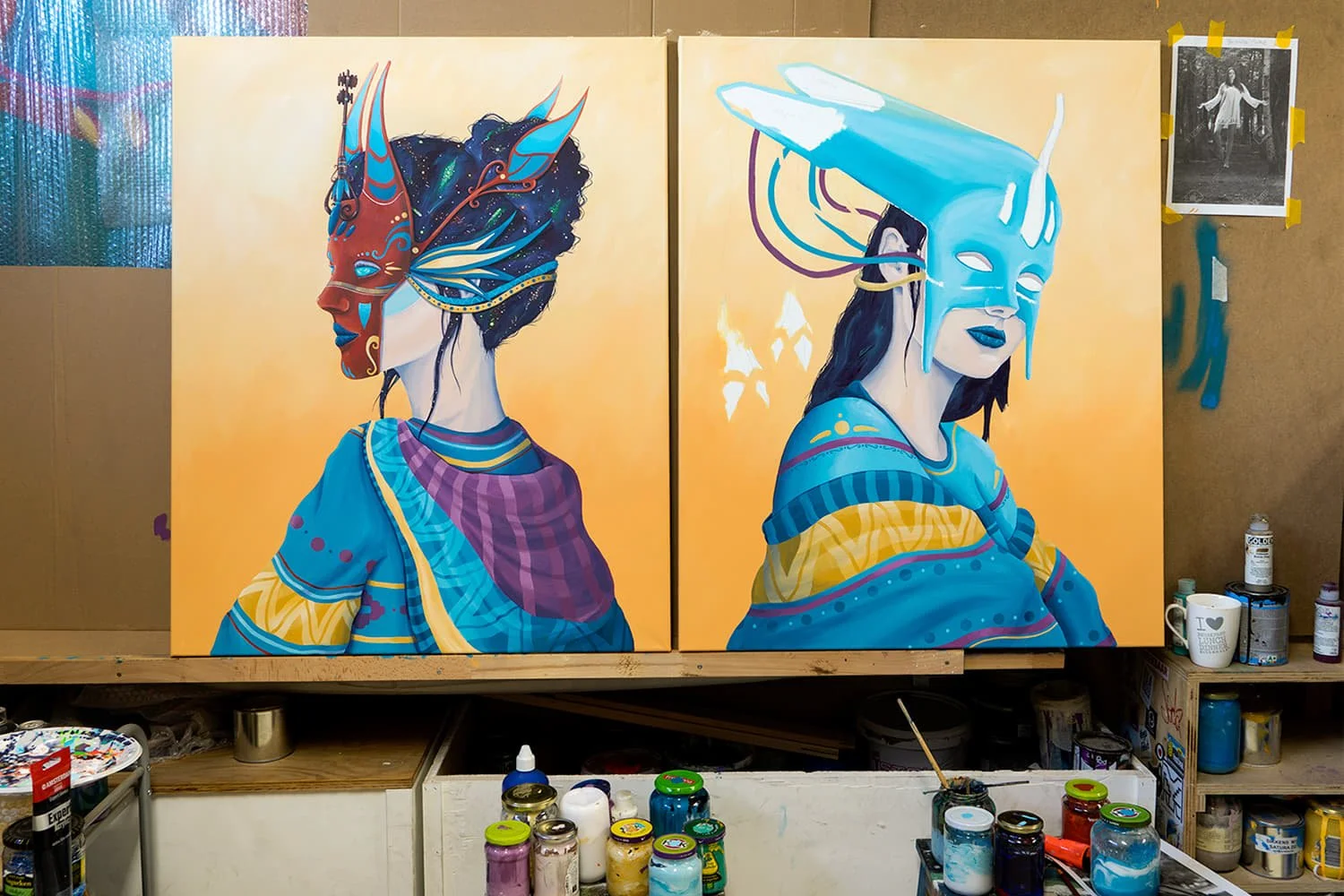
The three paintings were part of the group show “Behind the Mask”, curated by Sarah Umles, at Angels Gate Cultural Center in Los Angeles, California. In this video, I share the inspirations and symbolism behind my paintings.
Translating the Myth into My Paintings
Rather than illustrating specific mythological scenes, I translate the essence of the Dísir into contemporary visual language. Masks, veils, posture, gaze, and layered textures become symbolic devices that evoke psychological thresholds. These symbols allow me to translate Norse mythology into paintings that speak to personal evolution rather than historical narrative.
Each painting explores a different dimension of the archetype:
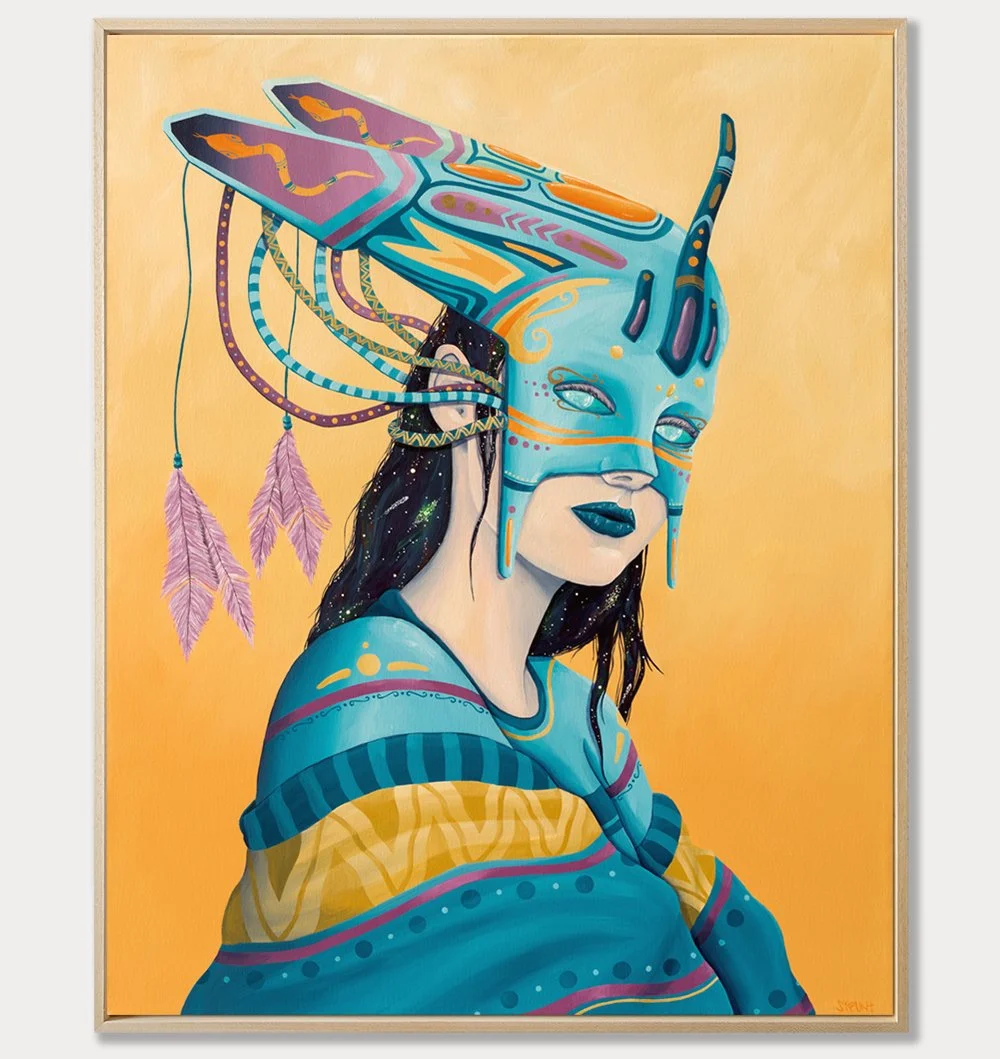
Metamorphosis
The first painting shows a woman wearing a mask adorned with a serpent, symbolizing transformation, renewal, and shedding the old self to grow. The figure stands between concealment and revelation, suggesting that true protection begins with self-awareness.
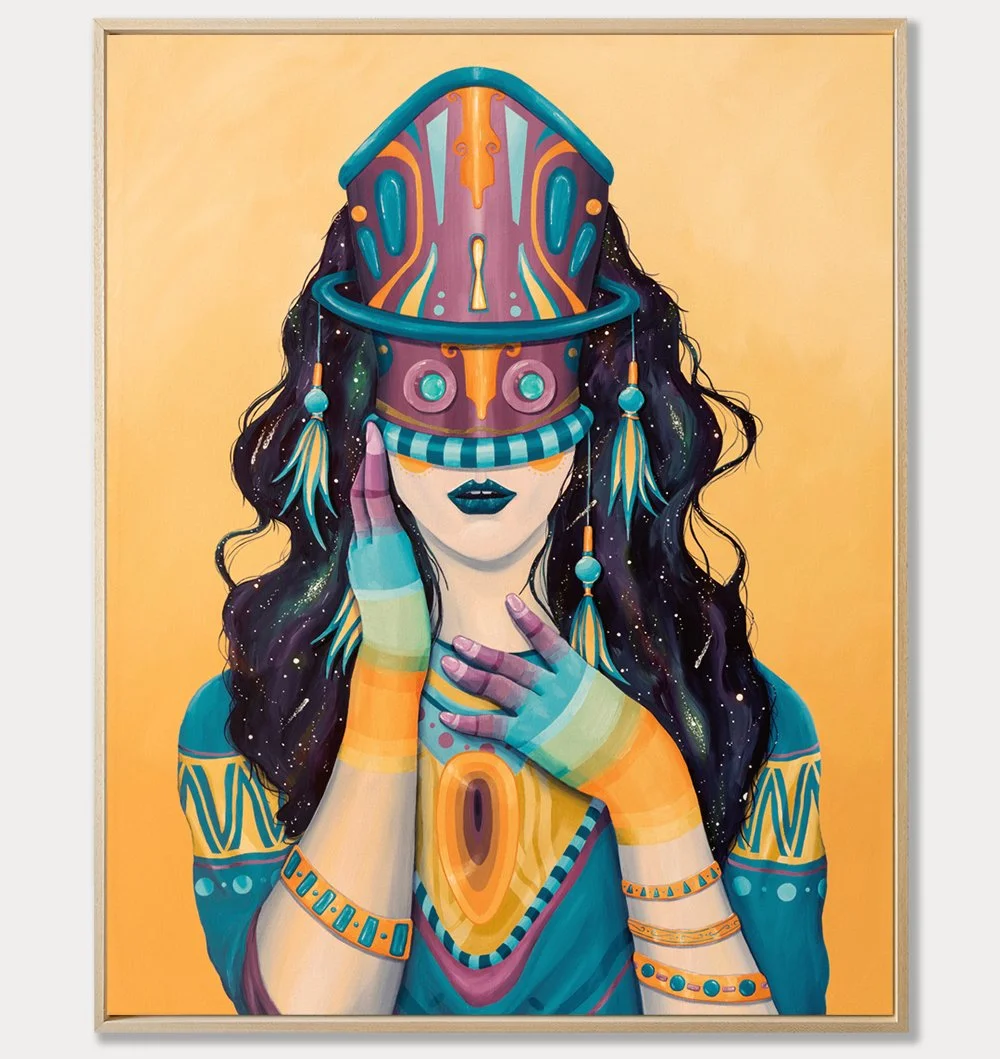
Veiled Knowledge
In the second painting, a woman’s masked face is paired with a vibrant lock, reflecting hidden wisdom, introspection, and the careful transmission of knowledge. The veil becomes a symbol of what remains unseen, highlighting that hidden aspects carry as much meaning as what is visible.
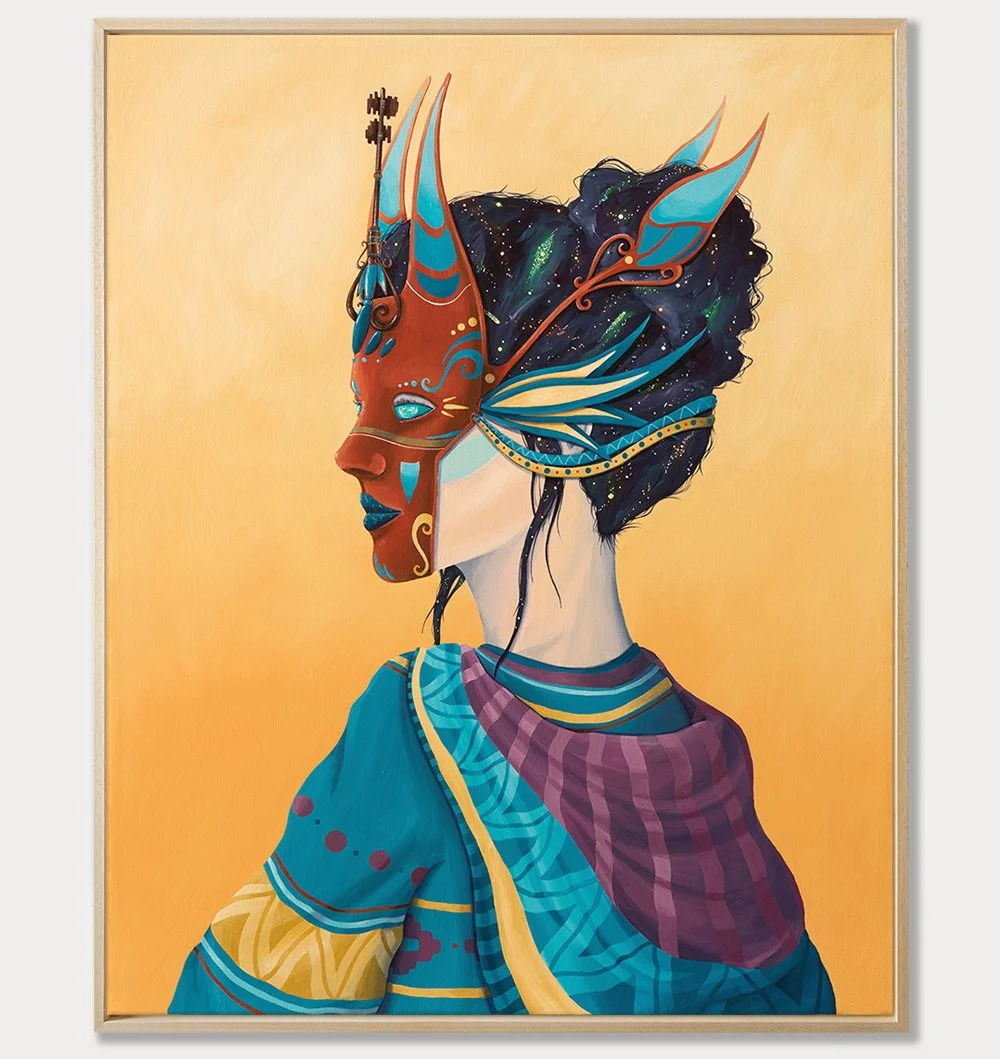
Eternal Wisdom
The third painting depicts a woman with a mask featuring a key and Fleur de Lis, representing the unlocking of inner awareness, balance, and spiritual harmony. This piece explores ancestral continuity, knowledge that transcends time, and embodies calm, inner authority.
Working on the Dísir paintings deepened my understanding of how mythology continues to shape contemporary art. Ancient narratives endure because they mirror human experience, transformation, mystery, protection, and awakening.
Rather than looking backward, this series creates a dialogue between past and present. The Dísir become symbols of inner guardianship, archetypes that still speak to us today.
To explore the complete body of work, including detailed images and collector information, you can visit
References
Snorri Sturluson, Prose Edda
Simek, Rudolf. Dictionary of Northern Mythology, 3rd edition, 2007
Davidson, H.R. Ellis. Gods and Myths of Northern Europe, 1964