
Nordic Runes: Meaning and Symbolism
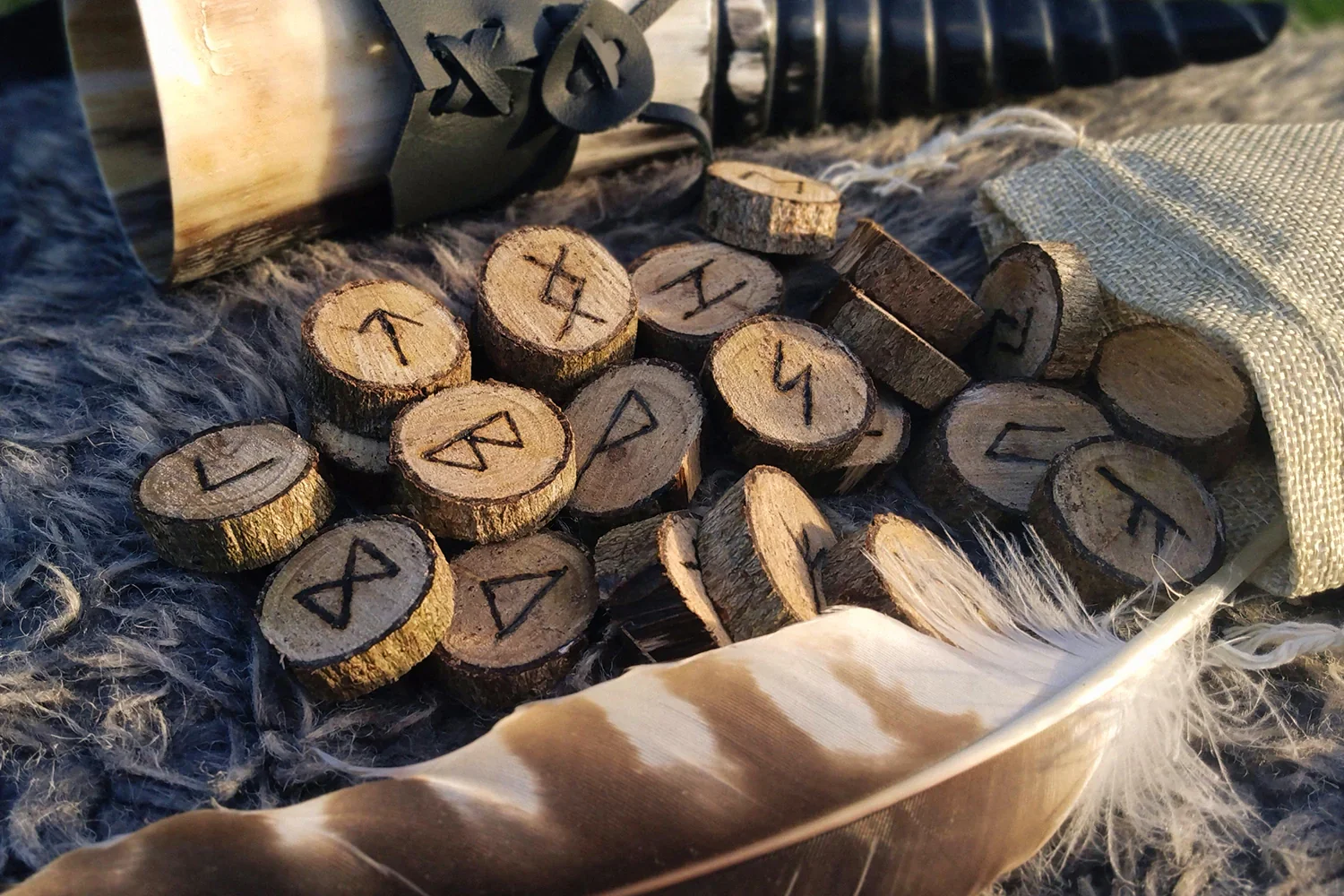
Nordic runes are far more than ancient letters carved into stone. They are symbolic systems that merge language, perception, and meaning into a single expressive structure.
Throughout history, they have been associated with transformation, identity, protection, and the invisible frameworks that shape human experience. Today, interest in runes continues to grow, not only from a historical perspective, but also from a symbolic and interpretative one. People are drawn to them as a way of exploring meaning beyond literal language.
In my work as an artist, runes form part of a broader symbolic language alongside keys, portals, hands and masks. Together, these recurring motifs explore identity, transformation, and the hidden structures through which we perceive the world.
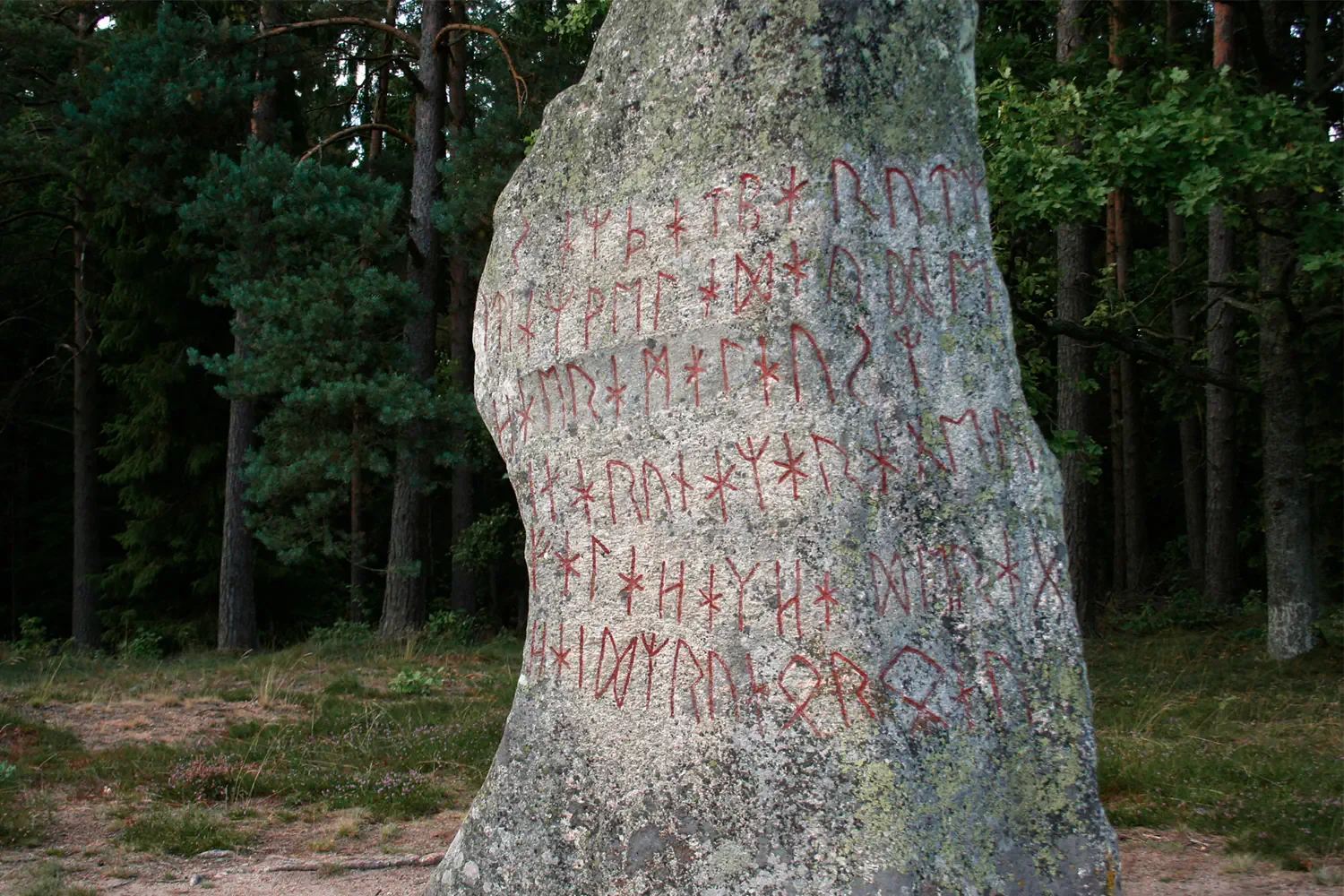
What Are Nordic Runes?
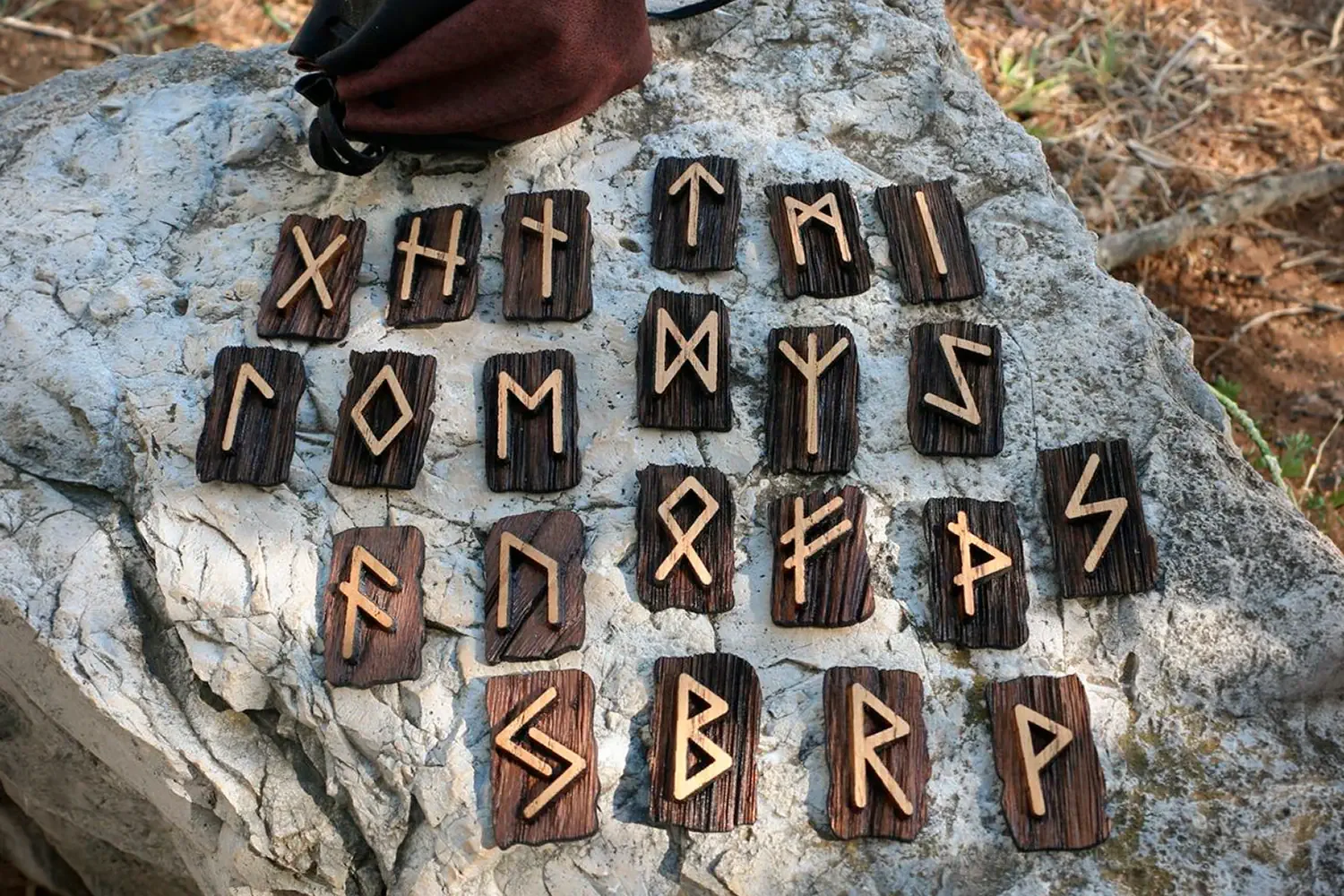
Nordic runes belong to ancient Germanic writing systems, most notably the Elder Futhark, a set of 24 symbols used approximately between 150 and 800 AD in Northern Europe.
The word “rune” comes from Old Norse, meaning “secret” or “whisper”, which already suggests that these symbols were never purely functional. They were carved into stone, wood, bone, and metal, appearing in everyday objects, ritual contexts, and commemorative inscriptions.
Unlike modern alphabets, runes do not only record language, they operate on multiple levels:
sound (linguistic function)
form (visual symbol)
concept (embedded meaning)
This makes them a hybrid system between writing and symbolic perception. Because of this dual nature, runes have fascinated historians, linguists, artists, and spiritual practitioners for centuries, each approaching them from a different perspective.
The 24 Nordic Runes and Their Meanings
The Elder Futhark is traditionally divided into three groups known as Aetts, each reflecting different dimensions of existence.
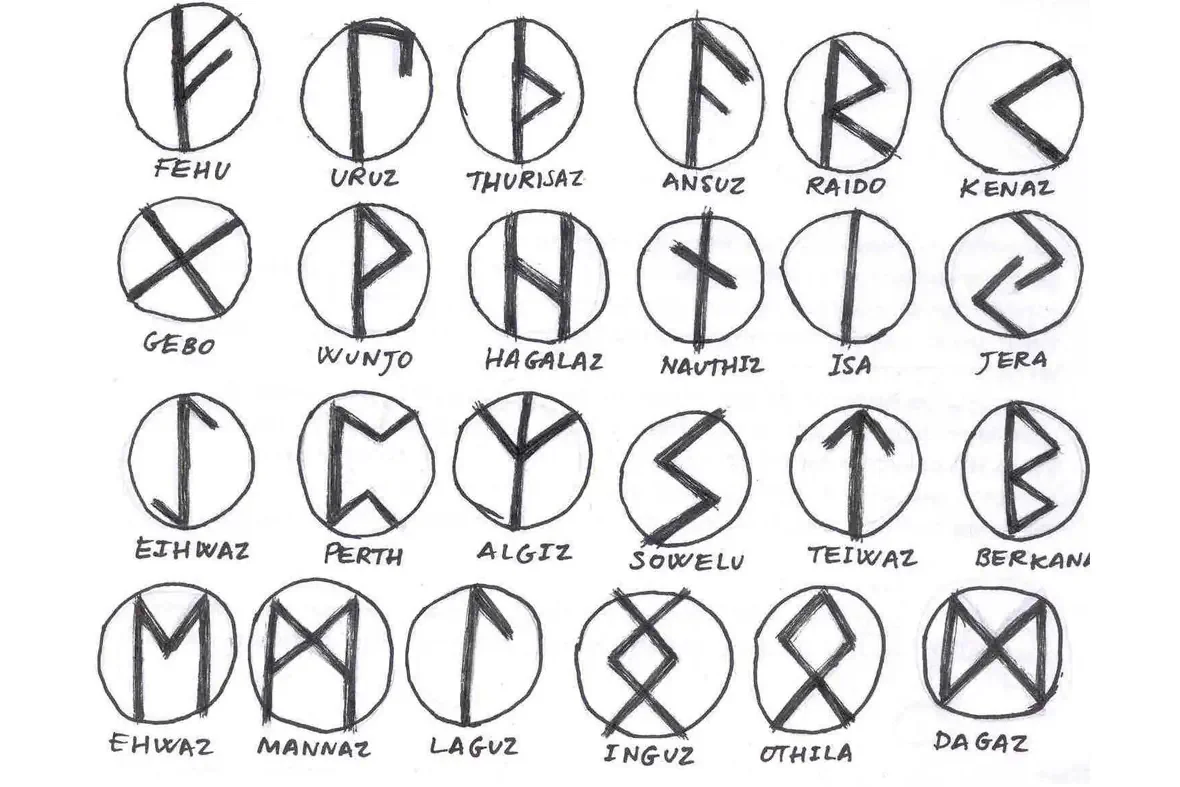
The 24 runes of the Elder Futhark, the oldest known Nordic runic alphabet.
Although each rune represents a distinct concept, their meanings should not be understood as fixed definitions. Like all symbolic systems, the significance of a rune changes depending on context, its relationship with other runes, and the perspective of the person interpreting it.
The following meanings should therefore be understood as guiding themes rather than absolute translations.
First Aett
(Material & Creative Forces)
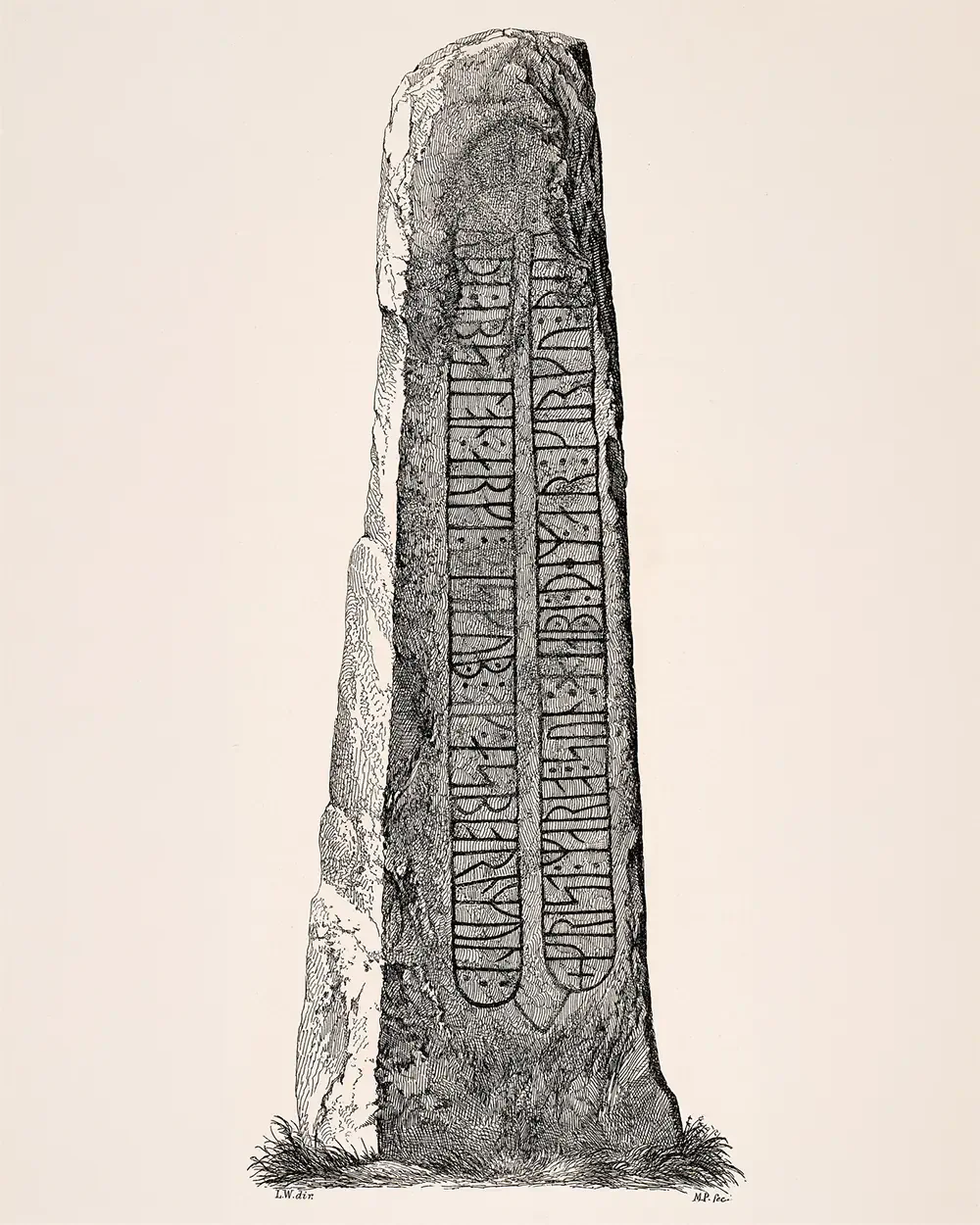
Drawing of the Norra Åsum Runestone (Skåne, Sweden), featuring a Viking Age inscription carved in Younger Futhark runes.
Fehu (ᚠ): abundance, flow, material energy, expansion
Uruz (ᚢ): strength, vitality, raw force, instinct
Thurisaz (ᚦ): disruption, protection, conflict, boundary
Ansuz (ᚨ): communication, insight, divine inspiration
Raidho (ᚱ): journey, rhythm, movement, life path
Kenaz (ᚲ): knowledge, clarity, creative illumination
Gebo (ᚷ): exchange, reciprocity, balance
Wunjo (ᚹ): joy, harmony, emotional alignment
Second Aett
(Transformation & Natural Forces)
Hagalaz (ᚺ): disruption, transformation, natural force
Nauthiz (ᚾ): necessity, resistance, pressure
Isa (ᛁ): stillness, pause, concentration
Jera (ᛃ): cycles, time, harvest, natural return
Eihwaz (ᛇ): transition, endurance, transformation
Perthro (ᛈ): mystery, fate, uncertainty, hidden flow
Algiz (ᛉ): protection, awareness, instinct
Sowilo (ᛋ): energy, success, clarity, life force
Third Aett
(Consciousness & Human Experience)
Tiwaz (ᛏ): justice, honor, direction, sacrifice
Berkano (ᛒ): growth, renewal, beginnings, nurturing
Ehwaz (ᛖ): trust, movement, partnership, progress
Mannaz (ᛗ): self, humanity, identity, awareness
Laguz (ᛚ): intuition, emotion, subconscious flow
Ingwaz (ᛜ): potential, internal development, gestation
Dagaz (ᛞ): awakening, breakthrough, transformation
Othala (ᛟ): heritage, belonging, memory, ancestry
Historical Note
While this guide focuses on the 24 runes of the Elder Futhark, the runic tradition evolved over time. Many surviving Viking Age runestones and medieval manuscripts, including the Codex Runicus, were written using later systems such as the Younger Futhark. Although the shapes and number of runes changed, they all belong to the broader family of Germanic runic alphabets.
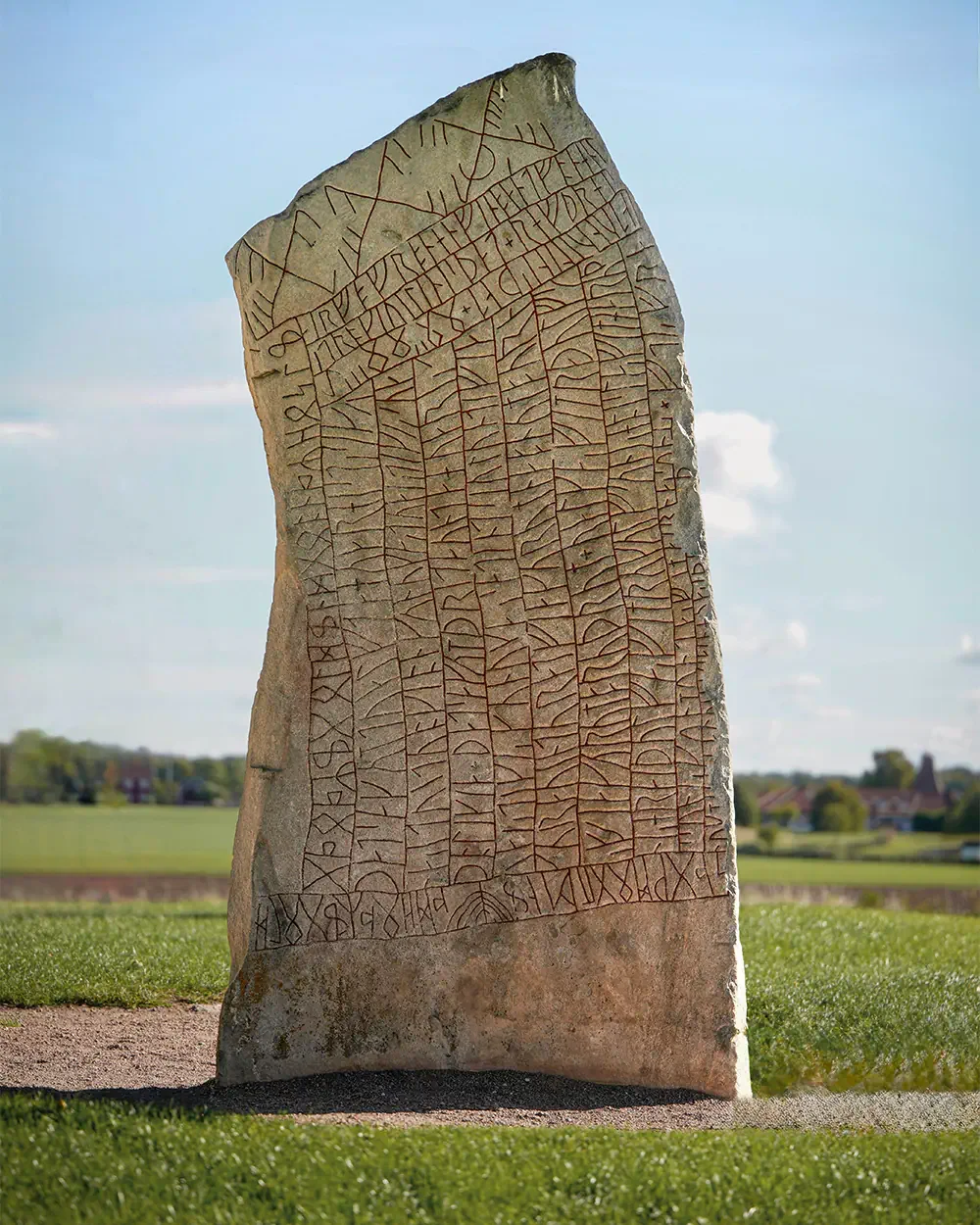
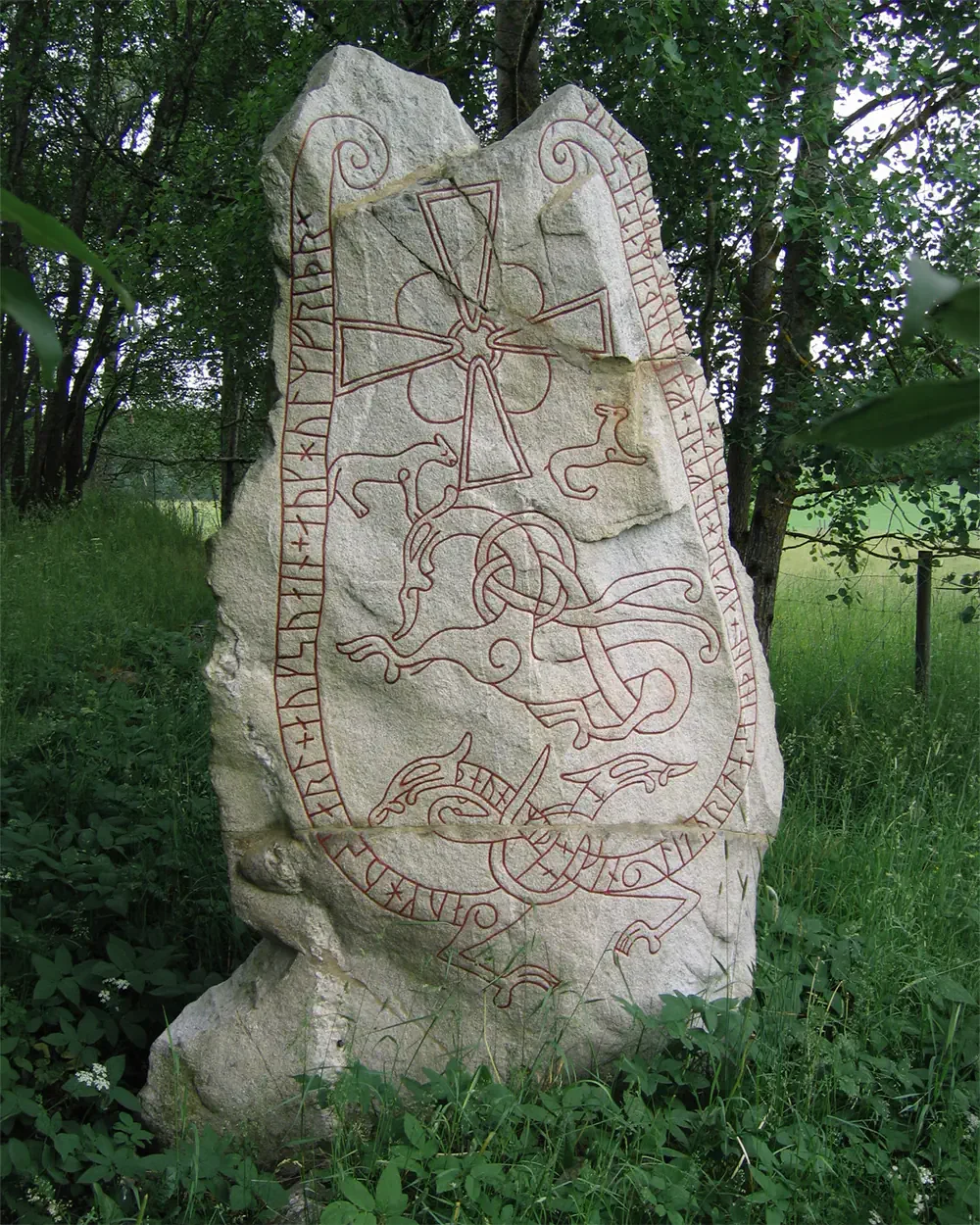
The Lingsberg Runestone (Sweden), a Viking Age monument carved with Younger Futhark runes.
Runes in Mythology and Sacred Knowledge
Runes are deeply rooted in Norse mythology and early Germanic belief systems, where they were understood as part of a sacred cosmology rather than simple writing symbols.
According to myth, Odin discovered the runes through sacrifice. He hung from the world tree, Yggdrasil, for nine nights, wounded and alone, until the runes were revealed to him. This myth places runes within a framework of initiation rather than learning. Knowledge is not acquired intellectually, but accessed through transformation, endurance, and lived experience.
In this context, runes are associated with:
sacred origin narratives
ritual and symbolic practice
transformation through sacrifice
access to hidden or divine knowledge
Historically, runes were embedded in both daily and ritual life, appearing in protective inscriptions, commemorative stones, and ceremonial objects. Here, the act of carving was not neutral, it was understood as an intentional act that engaged with forces beyond language. Whether engraved on memorial stones or ritual objects, runes were understood as symbols capable of preserving memory, expressing intention, and connecting the human world with a broader cosmological order.
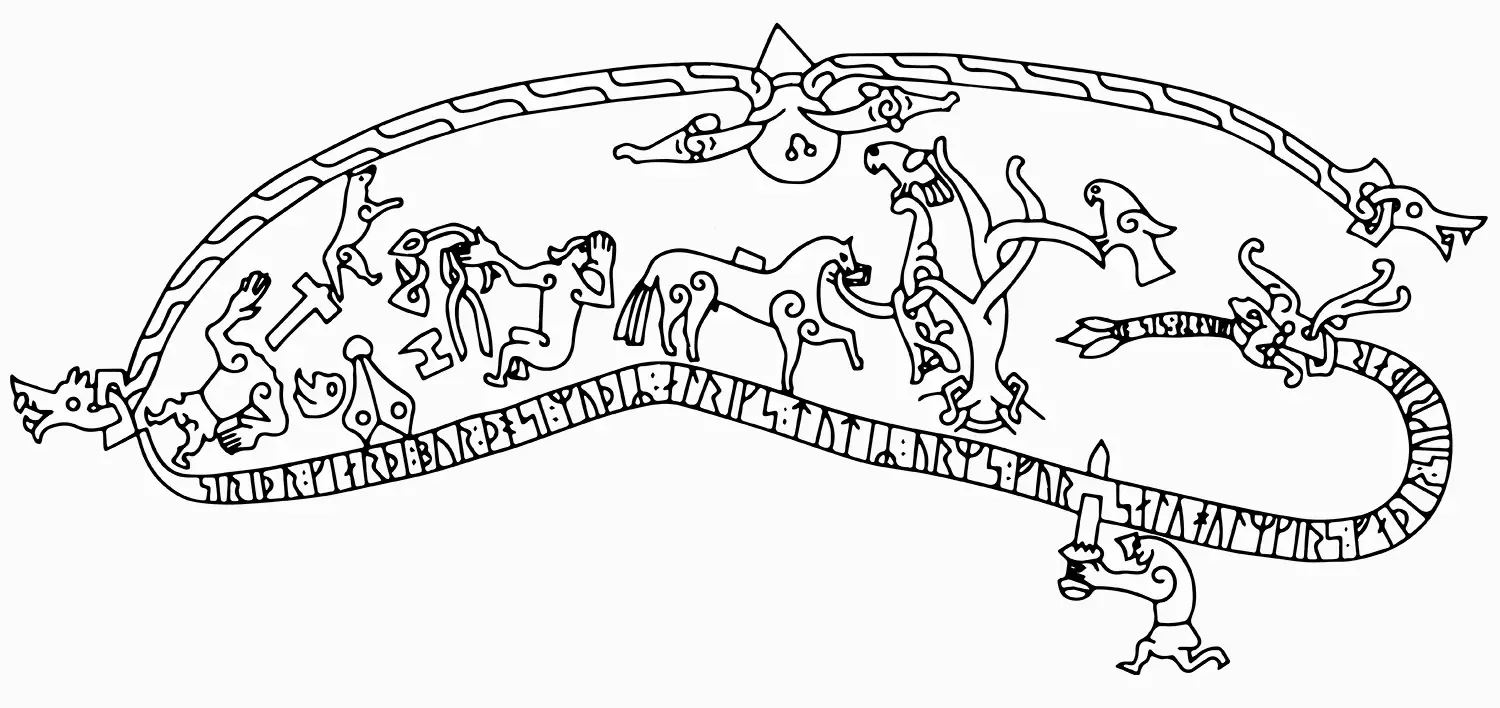
The Ramsund inscription (11th century, Sweden), combining Younger Futhark runes with scenes from the Norse legend of Sigurd.
Symbolism and Thresholds
Beyond their historical and mythological origins, Nordic runes can be understood as symbolic languages rather than fixed signs. Unlike ordinary letters, they invite interpretation instead of delivering a single meaning. Their significance emerges through context, experience, and the relationship between the symbol and the observer.
This is why runes can be understood as threshold symbols. They exist in transitional spaces where different ways of understanding reality meet. They operate between:
perception and interpretation
language and image
instinct and awareness
the visible and the invisible
Rather than providing definitive answers, runes encourage reflection. They create spaces where meaning can emerge naturally instead of being imposed. This symbolic openness is one of the reasons Nordic runes continue to resonate today, both as historical symbols and as timeless visual metaphors.
This idea of symbolic openness also informs many of my paintings, where layered symbols invite multiple interpretations.
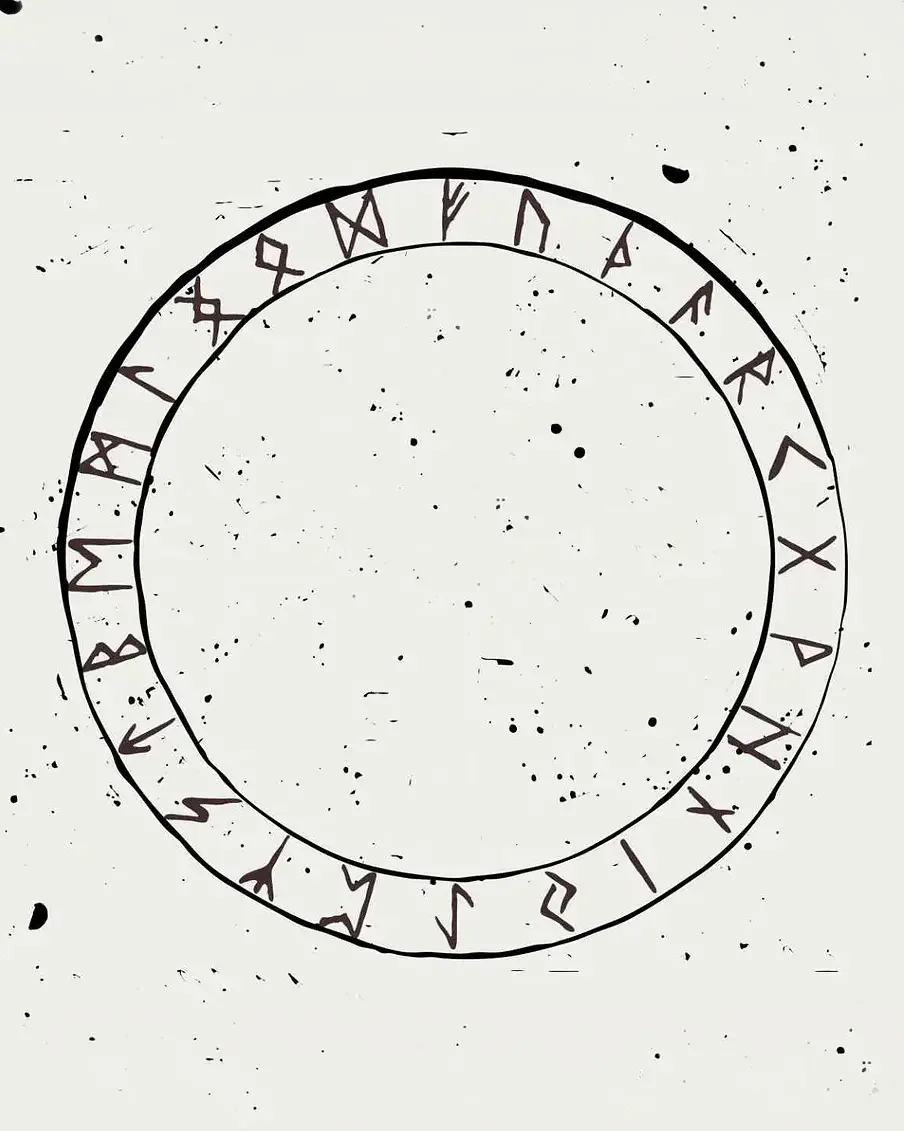
Elder Futhark rune circle featuring the 24 symbols
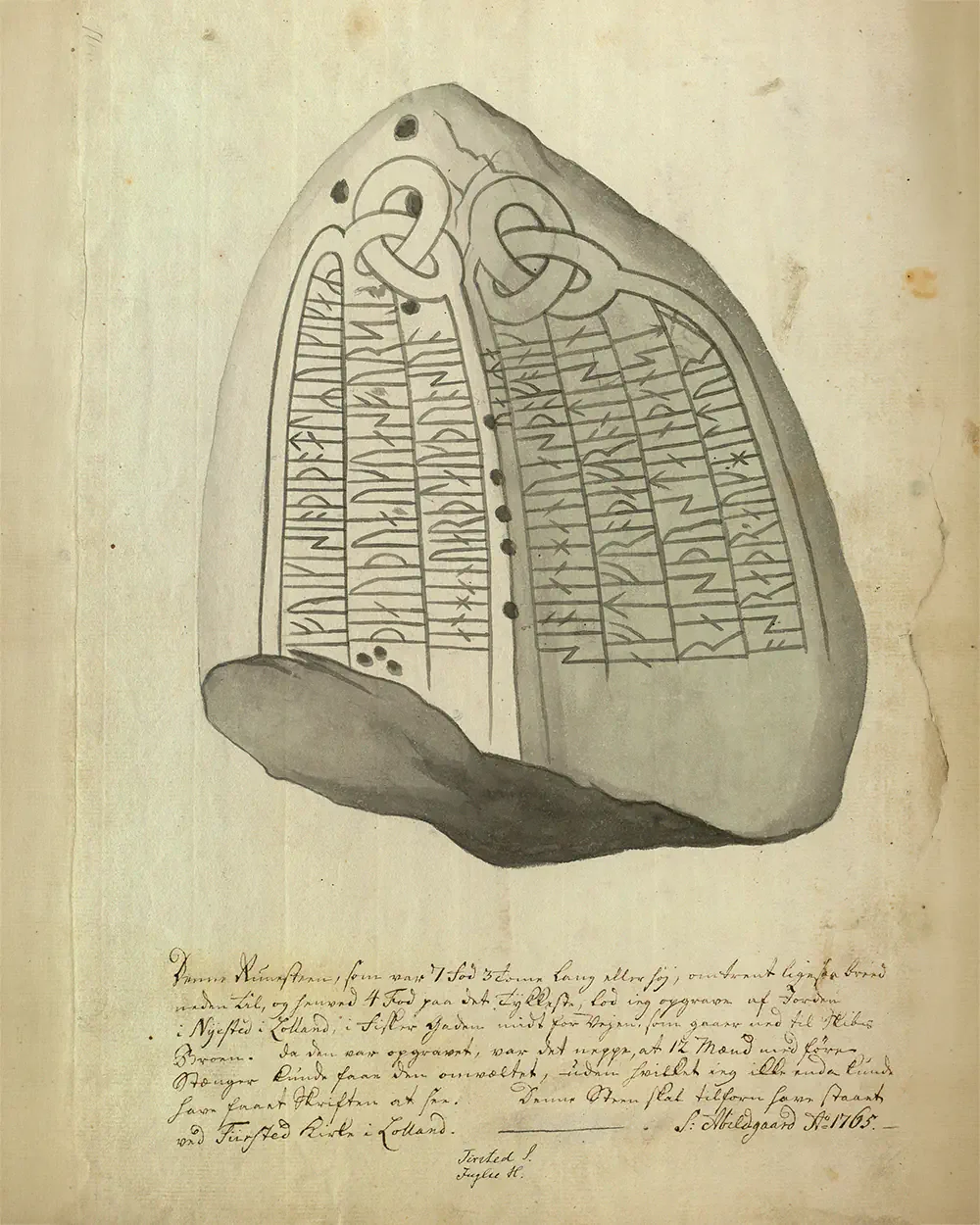
Historic drawing of the Tirsted Runestone, preserving a Viking Age runic inscription documented in 1765.
What Do Nordic Runes Mean Spiritually?
Although the original Norse people did not describe runes using modern spiritual language, many contemporary traditions interpret them as archetypal symbols of personal transformation.
Rather than predicting the future, runes encourage reflection on inner processes. They are often approached as mirrors that reveal patterns of growth, challenge, intuition, and change.
From this perspective, runes are associated with:
self-awareness
emotional cycles
transformation and personal growth
intuition and inner perception
Their value lies not in telling someone what will happen, but in helping them understand what they are experiencing.
This is why many people today use Nordic runes as tools for meditation, journaling, contemplation, and personal reflection.
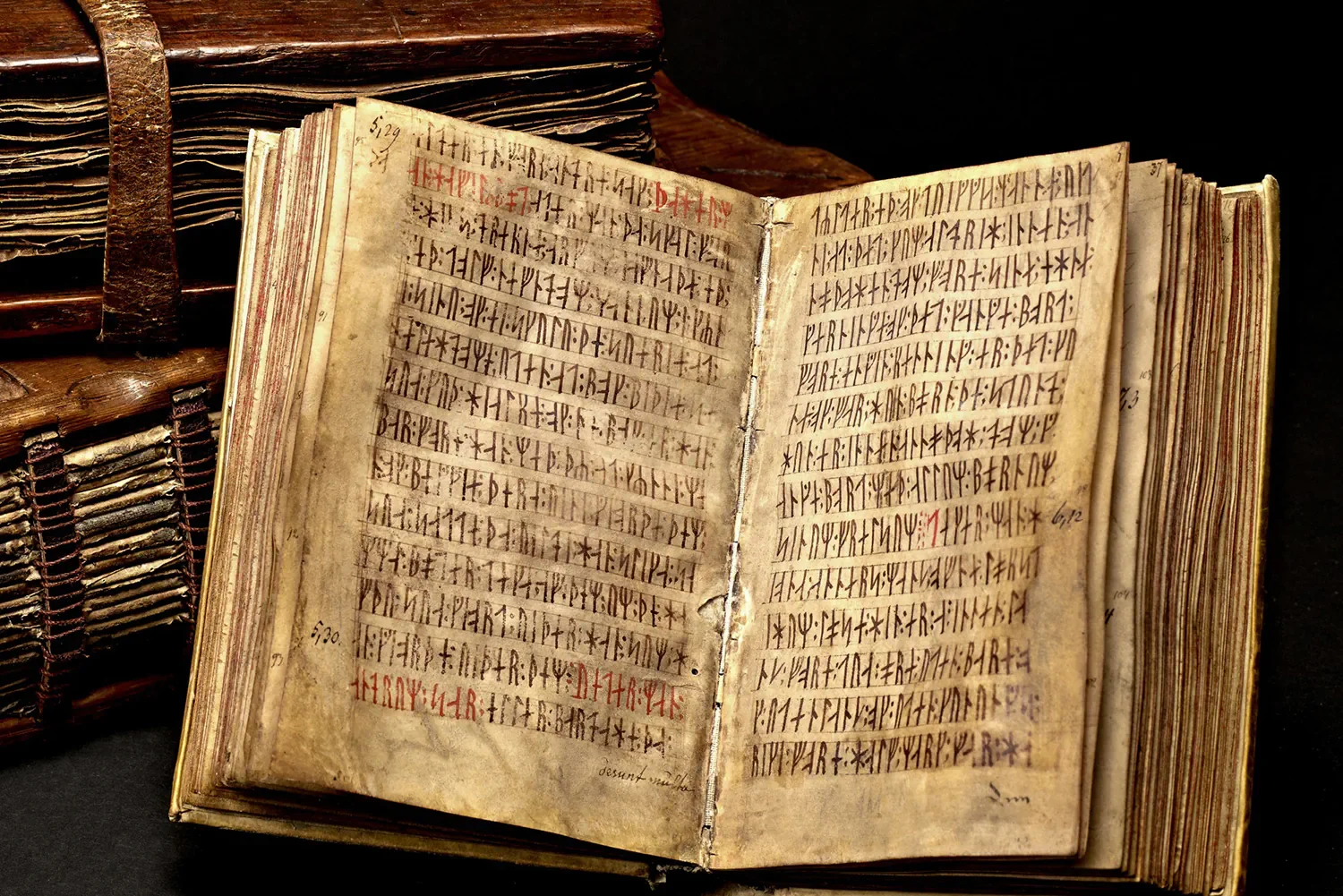
Codex Runicus (c. 1300 AD), a medieval manuscript written almost entirely in runes and containing one of the oldest surviving texts of the Scanian Law.
Understanding the Elder Futhark as a Symbolic System
One of the most remarkable aspects of the Elder Futhark is that it is more than a collection of twenty-four independent symbols. Each rune gains meaning through its relationship with the others, creating a coherent symbolic system rather than a series of isolated definitions.
Taken together, the runes explore recurring patterns that appear throughout human experience, including:
transformation and stability
creation and destruction
movement and stillness
order and chaos
Rather than describing reality directly, the Elder Futhark offers a symbolic framework through which these universal dynamics can be understood and explored. This interconnected structure is one of the reasons the Elder Futhark continues to inspire historians, artists, designers, and people interested in symbolism today.
How to Understand Nordic Runes
There is no single "correct" way to understand Nordic runes. Historical scholarship provides valuable context, while symbolic and artistic interpretations continue to evolve.
A balanced approach is to:
observe each rune's form
learn its historical and cultural background
understand its traditional symbolism
remain open to personal interpretation
The richness of the Elder Futhark lies precisely in this balance between historical knowledge and individual reflection. Over time, the meaning of a rune becomes clearer not through memorization, but through repeated observation. Understanding runes is less about finding definitive answers and more about developing symbolic literacy.
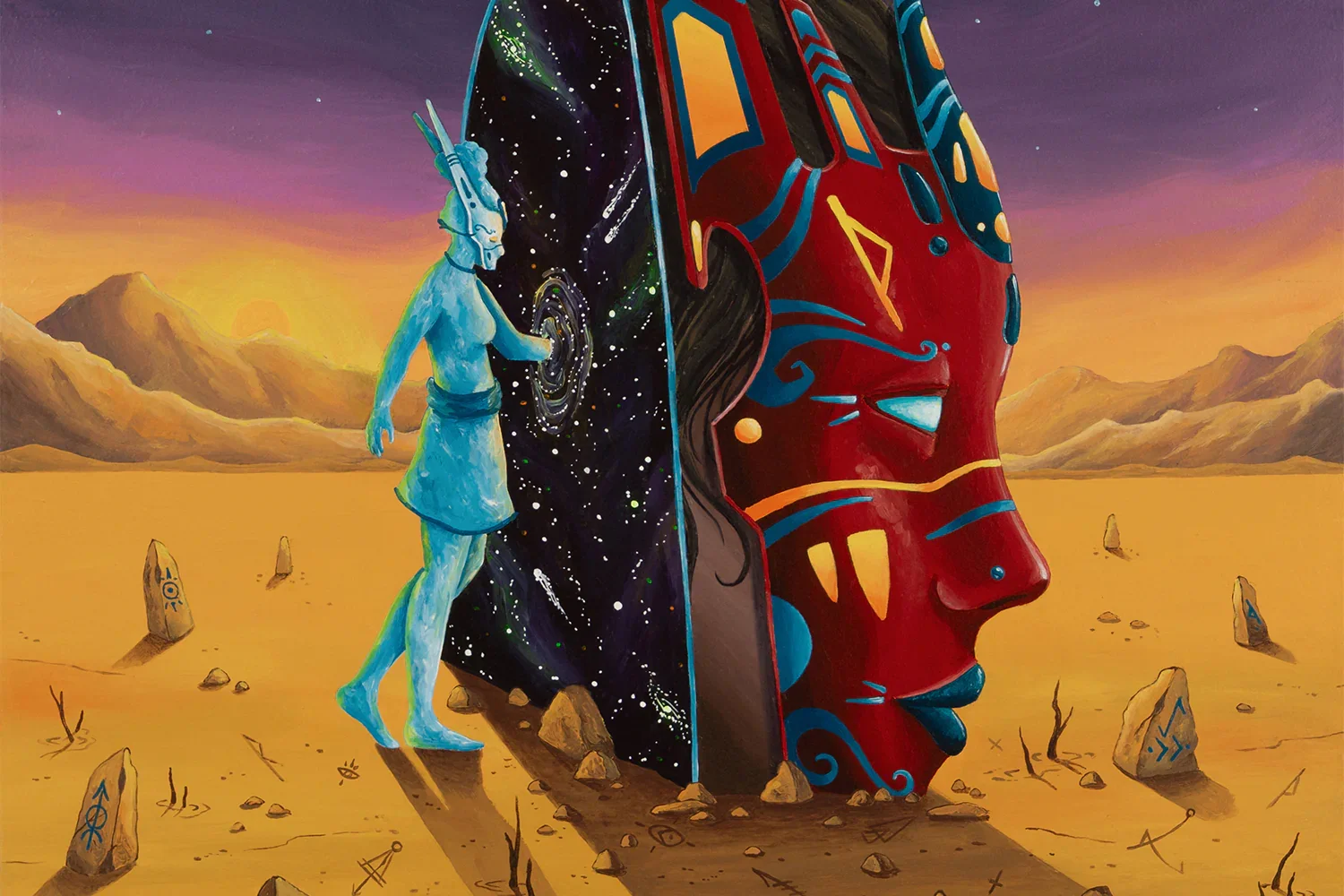
The Threshold Within
The Symbolism of Nordic Runes in Modern Art
In contemporary art, Nordic runes are no longer used primarily as an alphabet. Instead, they have become powerful visual symbols capable of communicating ideas that words alone cannot fully express.
Artists incorporate runes to:
create multiple layers of meaning
suggest hidden narratives
connect ancient traditions with contemporary ideas
evoke mystery, transformation, and timelessness
Their geometric simplicity makes them visually striking, while their cultural and historical depth gives them lasting conceptual power. Rather than functioning as decorative motifs, runes invite viewers to slow down, interpret, and actively participate in the meaning of an artwork.
For many artists today, runes are not simply references to the past, but living symbols that continue to inspire new interpretations. Their unique ability to exist simultaneously as language, image, and symbol is what makes them such a compelling source of inspiration for contemporary artistic practice.
Several of my artworks explore this symbolic approach, using runes alongside masks, keys, and portals to investigate transformation, identity, and hidden structures of perception.
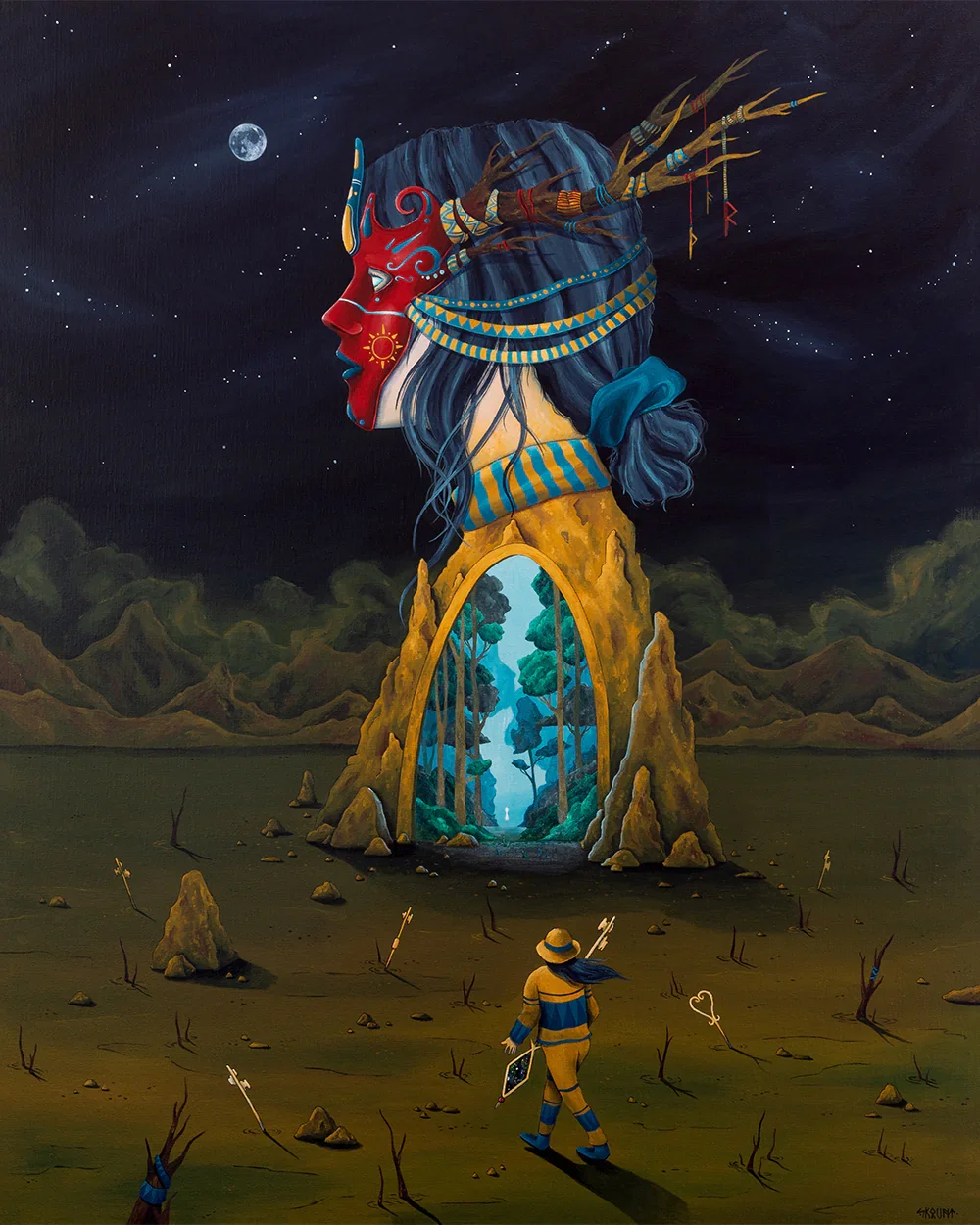
Inner Eden
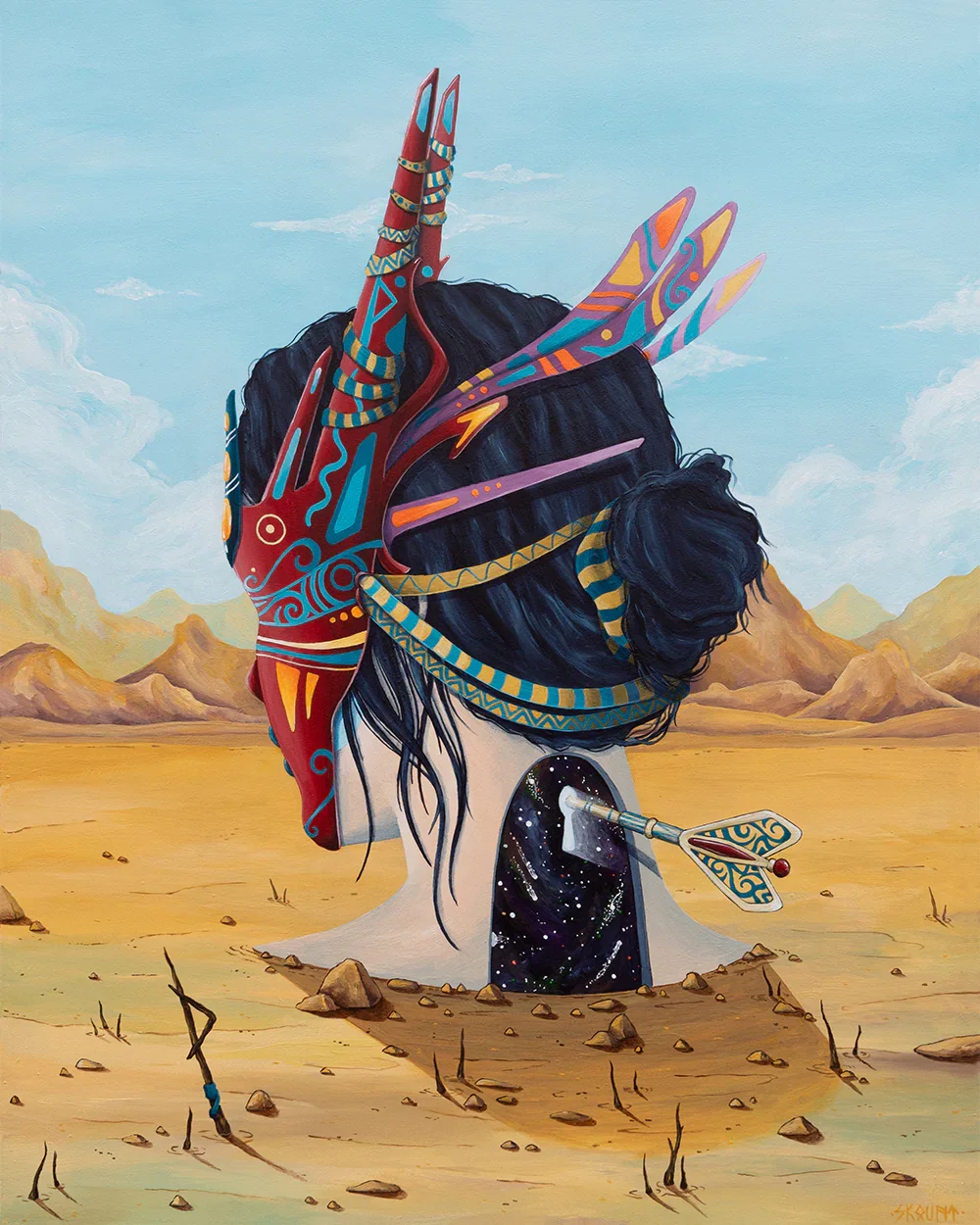
Unlocking
Why I Use Nordic Runes in My Artwork
My interest in Nordic runes does not come from historical reconstruction, but from their symbolic potential. Within my artistic practice, they become part of a visual language that explores identity, memory, transformation, and the invisible connections between inner and outer worlds.
Keys to the Invisible
They act like codes. Not everything is meant to be explained, some things are meant to be discovered.
Open Meaning
Each viewer interprets them differently. A rune is never fixed, it evolves with perception.
Connection Between Worlds
Runes exist between language, image, logic, and intuition.
Timeless Energy
They carry something ancient that still feels active in the present.
If you'd like to explore how these symbolic ideas take shape beyond words, discover my collection of paintings inspired by mythology, transformation, and hidden meaning.
FAQ: Nordic Runes
What are Nordic runes used for?
Nordic runes were used for writing, symbolic expression, and ritual meaning. Today they are also used in art and personal symbolic systems.
How many Nordic runes are there?
The Elder Futhark consists of 24 runes.
Are runes symbols or letters?
Both. They function as an alphabet but also as symbolic structures of meaning.
Are Nordic Runes Still Used Today?
Yes. Although they are no longer used as everyday writing systems, Nordic runes continue to be studied in archaeology, history, contemporary art, and symbolic practices.
What Is the Difference Between the Elder Futhark and Younger Futhark?
The Elder Futhark is the oldest runic alphabet and consists of 24 runes. During the Viking Age, it evolved into the Younger Futhark, which contains 16 runes adapted to the Old Norse language.
Are Nordic Runes Religious?
No. Runes were part of the cultural and spiritual traditions of ancient Germanic peoples, but they are not a religion. Today they are studied as historical symbols, artistic motifs, and tools for personal reflection.
Are Nordic Runes Viking?
Not all Nordic runes are Viking. The Elder Futhark predates the Viking Age, while Vikings primarily used the Younger Futhark, which developed from the earlier alphabet.